
Sadly I have reached the point where I'm growing tired of rattling off the list of countries I will be serving, when people are giving me the third degree about the World Race. I think it's just due to the fact that I've been talking about the Race with a lot of people recently, and listing off the same 11 countries has just grown tiresome. Yes, it bums me out, and I think that over the next few months, my zeal shall return; but for the time being, it's difficult not to make up 11 new countries every time I get asked: Wales, Latvia, Azerbaijan, Sri Lanka, Tajikistan, Madagascar, Sierra Leone, Lesotho, Laos, Hong Kong, and North Korea… wouldn't that be a way to finish things off.
In the interest of diplomacy, I should let all North Korean spies know that the former list is completely fictional. Truly, the preview for my next stop in this 11 month journey:
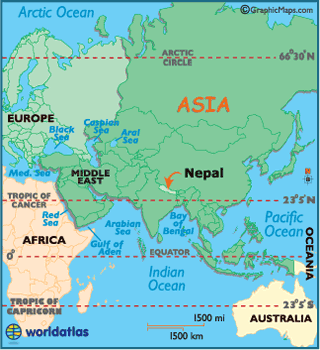
Country #5: Nepal
The first thing that people probably need to know about Nepal is that it is indeed home to Mt. Everest. And let it be known that I will almost certainly spend the month of November making obscure references to Edmund Hillary, Tenzing Norgay, Misshapen flags, Yetis, Sherpas, etc… while leading choruses of Ain't no Mountain High Enough and a John Denver rip-off of Himalaya Mountain High.
(Yawn) History
Nepal's name is believed to have originated when a Hindu sage named Ne, established himself in the valley of Kathmandu in prehistoric times. The term "pala" in Sanskrit, translates to "place protected", so Ne-Pal roughly translates to "The country looked after by Ne".
For the most part, Nepal has endured a relatively peaceful history. As is the case with most countries of the world, they've had their share of in-country warfare, and during the time of the British East India Company, they had some disputes with Great Britain, but overall, their history has been free of many major conflicts or political strife.
One major event in Nepal's recent history came in 1996 when the Communist Party of Nepal made a violent attempt to overthrow the royal parliamentary system, and replace it with a Maoist socialist republic.
This led to a 10-year civil war within Nepal, which claimed the lives of over 12,000 Nepalese citizens.
In 2001, Gyanendra inherited the throne of Nepal, dismissed the entire government, and assumed full executive powers to quash the Maoist movement. Unfortunately for Gyanendra, a stalemate had developed within Nepal, as Maoists were firmly entrenched in country-sides, though they couldn't displace the military located within the cities.
In 2006, Gyanendra turned power back over to the Nepalese people, and a House of Representatives was reinstated. Not long afterwards, the House voted to end the power of the king, and declared Nepal a secular state, ending it's long status as a Hindu kingdom.
Today Nepal's government works as a democratic republic, though political tensions, caused by subsequent communist movements have continued to this day.
Religion in Nepal
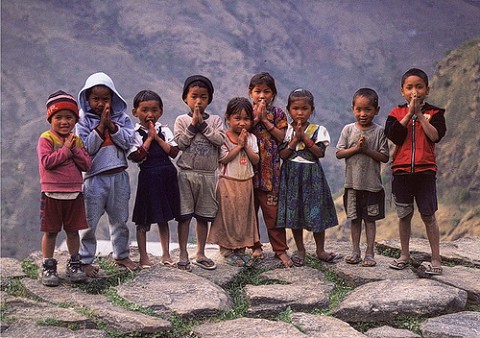
Based on it's geography, Nepal, along with many of it's neighbors, are strong followers of Hinduism and Buddhism. Hindus account for over 81% of the population, while 9% of Nepalese residents are Buddhist followers. Muslims make up 4.4% of the population, Mundhun followers are 3% of Nepal, and coming in at 5th in the rankings is Christianity, which accounts for just 1.4% of the population of Nepal.
Clearly, we have our work cut out for us in Nepal. It's a country steeped in ancient traditions, and cultural religious practices. It's never easy to win people over for Christ, when these people know that most of their family and friends will treat them like outcasts if they turn away from their family heritage.
What we plan on doing in Nepal
This country above almost all others on the World Race, is shrouded in mystery to me. The only videos I've seen involve some manual labor in remote parts of the country, though the World Race website also mentions that we may work with widows and orphans of the country, or possibly spend time with victims of human trafficking, as Nepal is a hot-spot for other Southeast Asian countries from which to abduct trafficking victims.
Why I'm Excited
As I said before, this spot on the Race is something of a mystery to me. But every time I talk to fellow R squad members, or even possible supporters; people seem to be truly excited about the fact that we get to visit Nepal. I don't know if it's the fact that people associate it with Mt. Everest, but I can assure our supporters that we definitely will not be summiting Everest, a la Hillary and Norgay in 1953.
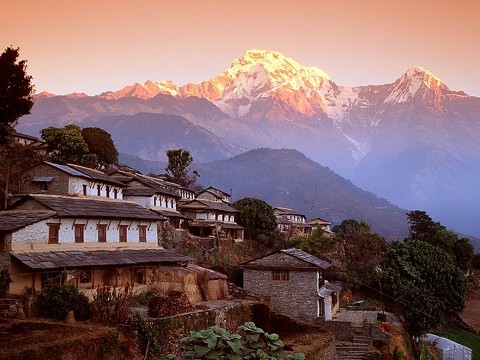
However, from the videos I've seen of the manual labor in Nepal, I am stoked to get a chance to get my hands dirty, and show the people of Nepal the love of Christ through our manual labor.
Some of the more remote villages have never been in contact with indoor plumbing or electricity. And though I'm sure after a month I will be happy to return to life's little conveniences, it will be a blast to take a step away from Western culture for a short amount of time.
Fun Facts
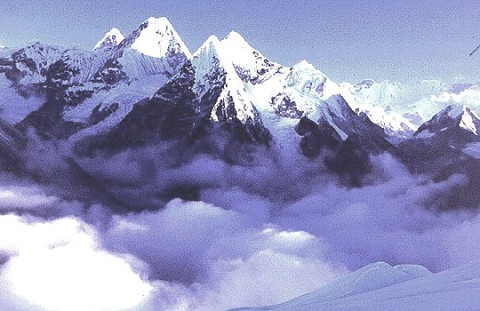
Nepal is home to 8 of the world's 10 highest mountain peaks.
Mount Everest was named by Andrew Waugh, the British Surveyor General of India, who recommended the mountain be named after his predecessor, Sir George Everest.
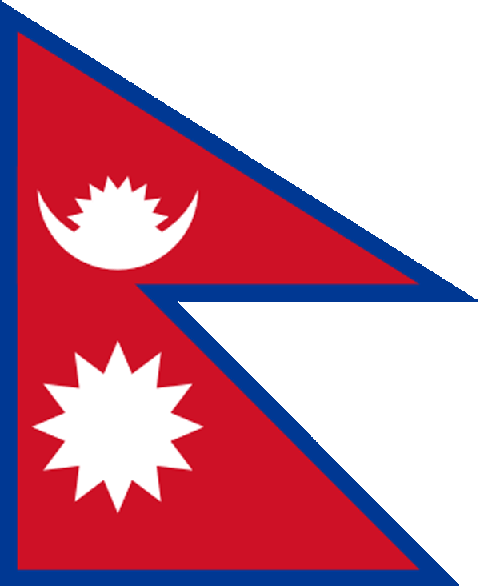
Nepal's flag is the only national flag in the world that is not quadrilateral in shape.
Sports are a very minor part of Nepalese culture, though soccer and cricket would be the two current most popular sports in the country.
In Nepal, touching anything with your feet is considered an offense.
Killing a cow for meat is a felony.
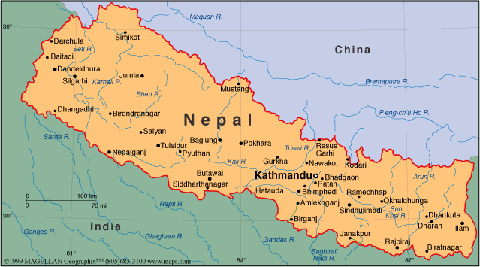
Kathmandu, Nepal's capital city, is the inspiration for songs by Bob Seger and Cat Stevens.







