Here's the first stop in my personal return to World Race countries. My dad has done business in Ukraine for almost 20 years, and I've been there on 3 occasions for family trips. It would be a stretch to say that I'm 100% looking forward to it, as Ukraine is far from the nicest European location, but I know my dad is excited to have us there, so he can show us the ropes, and let us know the right people we need to bribe.
Lucky #3: Ukraine
Boring shtuff:
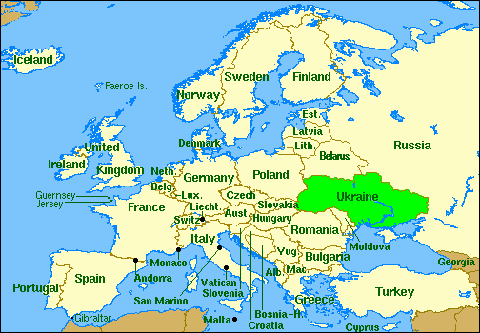
First thing people should know is that the proper name of the country is "Ukraine", not "The Ukraine", as many people think. The Ukrainian government officially dropped the "the" from the official name of the country in 1993.
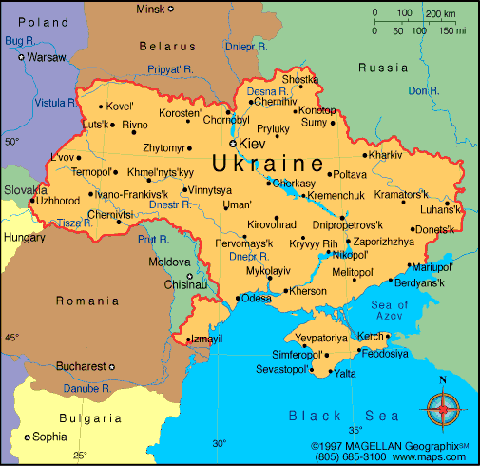
For most of Ukraine's history, it had been under control of several neighboring nations, including Poland, Russia, and Austria-Hungary.
In the late 1920's, Ukraine enjoyed a heavy increase in industrialization, and the Communist party, who was in control at the time, gave increased privileges to people who worked in manual labor, as it was the largest social class within the cities.
Thanks to Soviet industrialization, the more rural peasants suffered, though they had long been part of the backbone of the Ukrainian nation.
In order to help finance industrialization, and feed the need for increased food supplies, Joseph Stalin instituted a policy where the land owned by peasants would be combined into collective farms.
Many peasants resisted this new policy, because they didn't want the land that had been in their families for centuries to be taken away. However, thanks to a system of secret police, anybody who resisted these policies was arrested and deported.
After losing many farmers to deportation, the increased need for productivity on the farms was simply put back into the hands of the peasants, as the government told them they would just need to work harder to make up for the lack of personnel.
The quotas that these peasants were forced to meet were often unrealistic, and if they didn't meet their goals, then they weren't allowed to receive any grain, which made starvation commonplace in the Soviet Union.
During the early 1930's, millions starved to death in what is now called the "Great Famine", which the Ukrainian parliament has now labeled a genocide.
During WWII, Ukraine and the Soviet Union fought against Germany, though some Ukrainians hailed the Germans as liberators. Their mood quickly changed when the Germans continued the old Soviet policies of collective-farm systems. The Germans also continued the genocide of the Jews in Ukraine, sent men to work in forced labor camps in Germany, and blockaded the transport of food on the Kiev River.
During WWII, it's estimated that anywhere between 5-8 million Ukrainians were killed during the conflict, including over half a million Jews.
Ukrainians continued to live under the reign of communist government until it finally declared it's independence in 1991.
Chernobyl Disaster:
One of the most significant events in Ukrainian history is the nuclear accident that took play in April, 1986 at the Chernobyl Nuclear Power Plant. To save all the nuclear mumbo-jumbo, there was essentially an explosion and fire at the plant, which released radioactive particles into the atmosphere, which spread over much of Western Russia and a majority of the European continent, though the majority of the contaminated area was actually in Belarus.
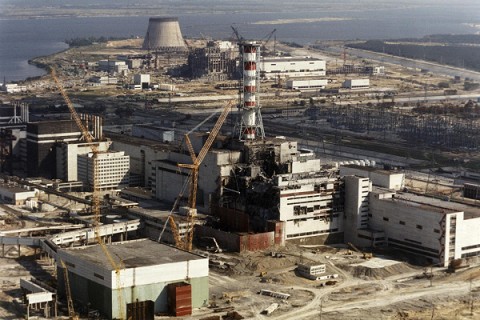
Chernobyl is still considered to be the worst nuclear power plant accident in history, and is only one of the two nuclear incidents classified and as a "level 7" on the International Nuclear Event Scale, the other level 7 being the Fukushima Daiichi disaster in Japan in 2011.
There were 31 deaths directly attributed to the accident, while the total amount of confirmed deaths currently sits at 64. However, that doesn't include the fallout of radioactive contamination, which has led to the death of over 4,000 people, mostly due to cancer and leukemia; and this number is still increasing over 25 years after the incident. And that doesn't include the thousands of non-lethal illnesses and deformities caused by radiation.
Religion in Ukraine:
Over 60% of Ukrainians don't claim any religion, and for those who do, it's hard to gage how many are truly active in their faith, which can also be said for the majority of European countries. However, the Orthodox church is the dominant religion in Ukraine, and that is mostly thanks to the conversion of St. Vladimir the Great.
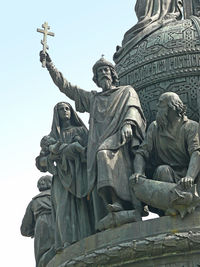
Vladimir was the ruler of Keivan Rus (what is currently the general area of Ukraine) in the 10th and 11th centuries, when Christianity was continuing to grow throughout Europe. However, Vladimir was fervently against Christianity, choosing the route of erecting pagan statues, partaking in rituals involving human sacrifice, while taking numerous wives and concubines.
In 983, after a military victory, Vladimir found it necessary to make a human sacrifice to the gods. A lot was cast and fell on a youth names Ioann, the son of a Christian named Fyodor. Fyodor stood against the sacrifice, and tried to appeal to the pagans, giving a great quote, which roughly translates to, "Your gods are just plain wood: it is here now but it may rot into oblivion tomorrow; your gods neither eat, nor drink, nor talk and are made by human hand from wood; whereas there is only one God — He is worshiped by Greeks and He created heaven and earth; and your gods? They have created nothing, for they have been created themselves; never will I give my son to the devils!"
Well, unfortunately Fyodor and his son were eventually killed by a mob of pagans, though they are widely regarded as the first Christian martyrs in that part of the world.
However, Vladimir remembered this incident, and decided to send his representatives to different parts of the world to investigate different religions. They didn't care for the Muslims because they didn't allow drinking, and the German churches were too old and stuffy, but when they visited the Orthodox churches of Constantinople, they were quoted as saying, "We knew not whether we were in Heaven or on earth… We only know that God dwells there among the people, and their service is fairer than the ceremonies of other nations."
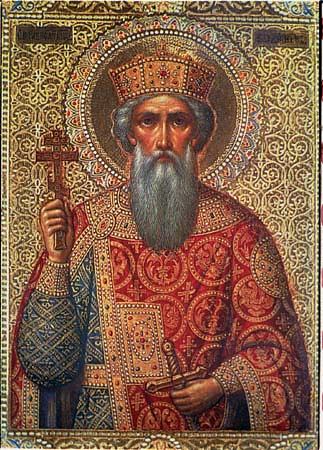
Much like Constantine himself, it's still debated whether or not Vladimir converted to Christianity because he wanted to turn his life over to Christ, or for more political reasons, but either way, this started a whole new movement of Christianity in that region of Europe, and Vladimir turned his life around 180 degrees.
What we plan on doing in Ukraine:
Again, it's hard to say at this point, but with the decline of the church in Eastern Europe, I know we will be reaching out to people, and trying to touch some hearts for Christ.
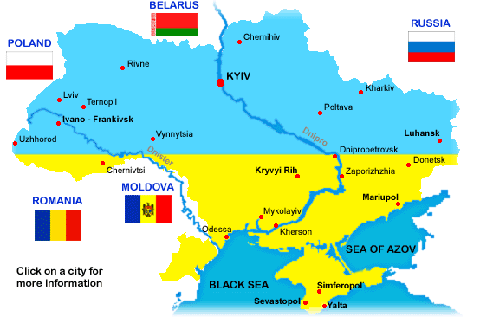
The World Race website mentions two things for Ukraine: a substantial orphan population, and human trafficking. Ukraine is the worst country in Europe, and one of the worst countries in the world when it comes to human trafficking, so we could do work to fight human trade, or spend time with needy children.
Why I'm excited:
As I mentioned before, Ukraine is one of the few countries that I will have some experience with, so I'm looking forward to returning and seeing some of the sights from previous journeys.
I know my Dad is super excited to help us out as well. I can't reiterate enough how crooked so much of Ukraine is, and it truly helps to know the right people. I've been blessed with parents who are truly excited for this journey, so I know my Dad will do anything in his power to help make our time in Ukraine more comfortable.
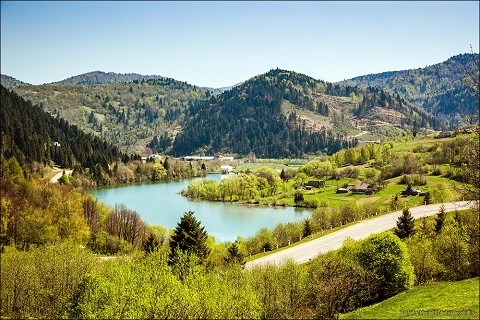
Fun Facts:
Ukraine is the 8th most popular tourist destination in Europe… not sure if that's a good or bad thing.
The word "Ukraine" comes from an old Slavic term, meaning "border region", or "frontier".
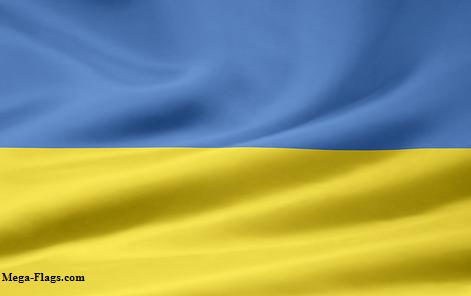
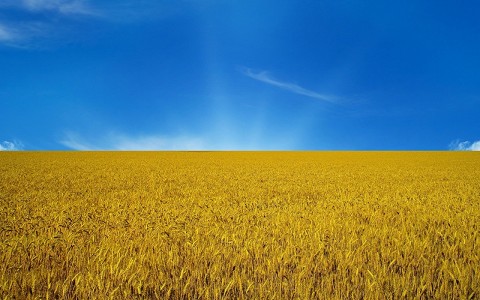
The Ukrainian flag contains blue to represent the sky, and yellow to represent lush wheat fields.
Famous boxers Vitali and Vladimir Klitschko are Ukrainian natives.
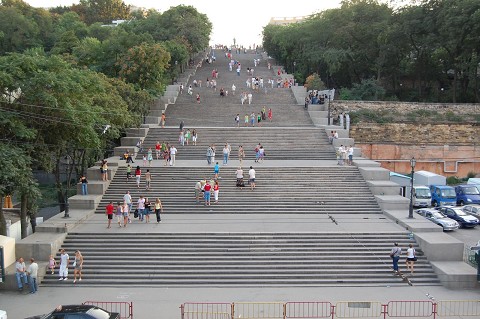
The Potempkin Steps in Odessa became famous after being used in Sergei Eisenstein's 1925 film The Battleship Potempkin, which has become a staple in film classes.