In the beginning, there was never a direct order to build the
tunnels; instead, they developed in response to a number of different
circumstances, most importantly the military tactics of the French and
U.S. The tunnels began in 1948 so that the Viet Minh
could hide from French air and ground sweeps. Each hamlet built their
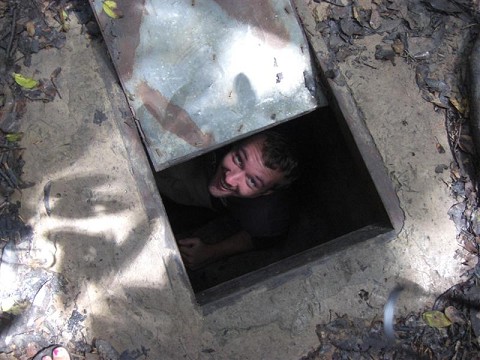
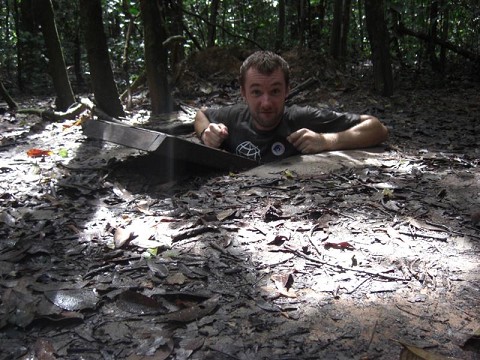
own underground communications route through the hard clay, and over
the years, the separate tunnels were slowly and meticulously connected
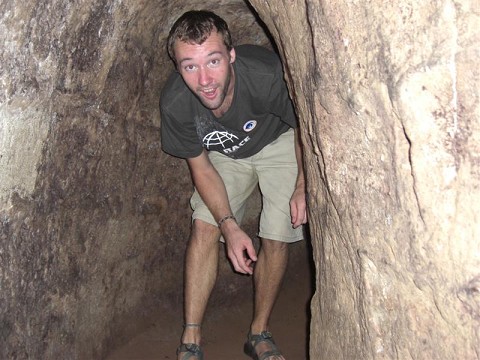
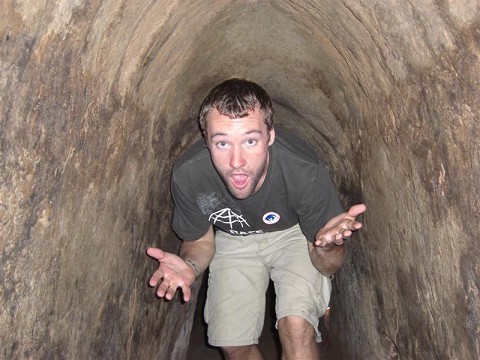
and fortified. By 1965, there were over 200 kilometers of connected
tunnel. As the tunnel system grew, so did its complexity. Sleeping
chambers, kitchens and wells were built to house and feed the growing
number of residents and rudimentary hospitals created to treat the
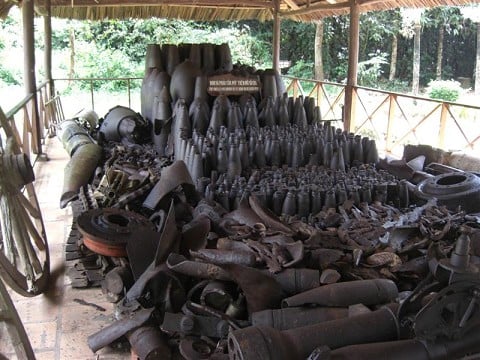
wounded. Most of the supplies used to build and maintain the tunnels
were stolen or scavenged from U.S. bases or troops
The medical system serves as a good example of Vietnamese ingenuity
in overcoming a lack of basic resources. Stolen motorcycle engines
created light and electricity and scrap metal from downed aircraft were
fashioned into surgical tools. Doctors devised new methods to perform
sophisticated surgery. Faced with large numbers of casualties and a
considerable lack of available blood, Dr. Vo Hoang Le Ly came up with a
resourceful solution. “We managed to do blood transfusion,” Vo said,
“by returning his own blood to the patient. If a comrade had a belly
wound and was bleeding, but his intestines were not punctured, we
collected his blood, filtered it, put it in a bottle and returned it to
his veins.”
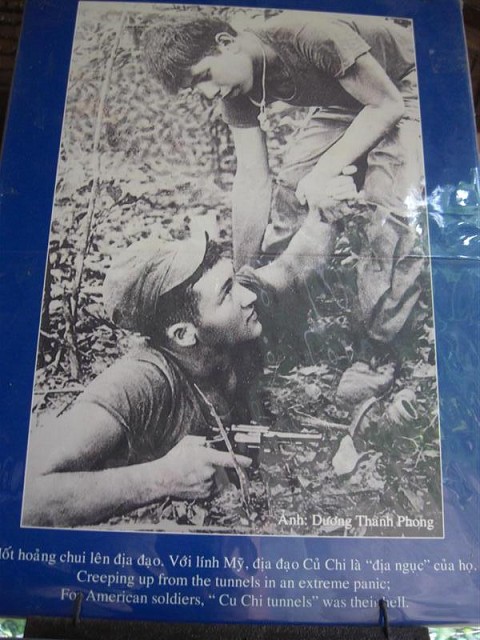
By the early 1960’s, the NLF had created a relatively
self-sufficient community that was able to house hundreds of people and
for the most part, go undetected by American troops based, literally on
top of the tunnels.