
I’ve been sitting at my computer for over half an hour watching the reflection of the Guinea hens on my blank screen. The problem isn’t that I have nothing to blog about but instead is because most of the moments that fill my days on the race could each be a blog by themselves. This month my team is working with El Puente (the bridge), a Christian organization that helps with many different ministries around Granada. We spent the week going to a different ministry each day and on Sunday my team will choose one or two of them to focus on for the rest of the month. I’ve decided to blog about what a typical day on the race looks like this month: the beautiful moments and the moments that could use some refurbishing.
Yesterday I ignored my alarms for 5:00, 5:15, and 5:30 to work out (some things haven’t changed) and finally woke up at 6:00 AM to race to be one of the first to the showers so that I wouldn’t be the person that runs out of water while covered in soap (again). I held my breath, jumped under the Titanic temperature of the water, and waited for my body to adjust. After showering and dodging the flock of 5 hens that live with us, I headed to the kitchen and made loud noises when I entered to scare the mice away. I wiped the ants off of the stone counter with bleach water and then ate my breakfast of knockoff corn flakes and a new fruit called Guayaba that I decided to try—it wasn’t my favorite.
Julio, our translator/amigo, pulled up outside of El Puente in a cattle truck converted to a taxi by hanging a tarp around the bed of the truck and placing wooden slats as benches underneath the tarp. We got into the “cab” with 4 other El Puente workers with the sole knowledge that we were going to a dump. Because the tarp covered the sides of the bed of the truck and the actual truck blocked our view from the front, the only thing we could see was the road disappearing behind us. Sight wasn’t required for us to realize we had arrived at the dump because instantly the ransid smell of the decaying garbage made me nauseated. When I stepped out onto littered ground and looked up, I became speechless. Breathtaking green volcanoes framed mountains of trash in front of us like a contrasting picture. I noticed dozens of vultures fighting with each other over food scraps and filthy stray dogs nipping at each other at the top of the mounds of garbage as if playing king of the hill over food wrappers.
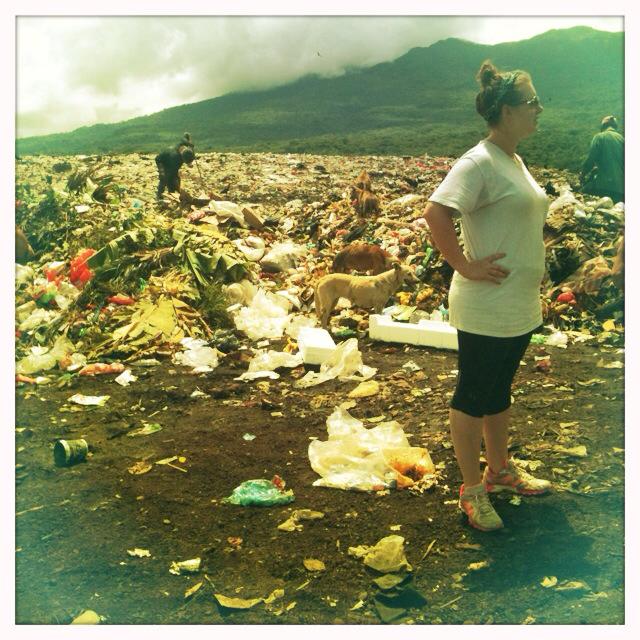
It was then that I noticed the people. Nicaraguans carrying bags on their shoulders were climbing the towering trash piles and sorting through the rubble. We all turned to Julio for an explanation, completely dumbfounded. Julio explained that these people were raised in a poor area near the dump by parents that probably worked in the dump as well, and they didn’t have the means or an education to find work in the city. Instead, they do the only thing they know: braving the scalding heat and smell of decay each day to sort through the trash that gets dumped daily from the city for bottles or anything worth money. They make an average of 8 U.S. dollars a week.
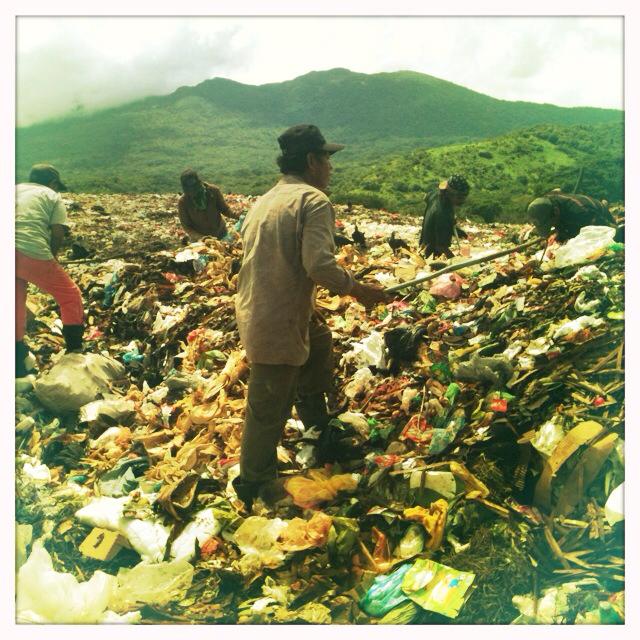
I don’t cry frequently, but my eyes teared up when Julio called out to them to come gather around for a free lunch and no one came because they compete with each other to find “valuable trash” and didn’t want to miss out on a bottle someone else might discover. After he finally managed to get them to stop working, around 50 or so people gathered around to hear a message from the bible, Beth shared her testimony, and we prayed for the workers. Usually more people work at the dump, but the earthquake the night before damaged some of their houses because they live in tin shacks or garbage bags stretched over wooden sticks. We served them a lunch of cheese, rice and beans, bread, and juice, and each person that passed through enthusiastically expressed their gratitude.
When my team piled into the back of the truck to leave, there was absolute silence and a few tears. It’s hard during these moments of the race to not feel guilty for the things I have or to not get discouraged at how much they need and how much I can give in comparison. It’s hard not to beat myself about dreading the cold shower or being grossed out about mice in the kitchen. And in the end, it’s comforting to come to the realization that God placed me here for a reason and that the best way to help these people is by loving them in every possible way I can. By showing them that I care and that they matter to me, hopefully I can convey to them that God feels the same way about them, and there is no greater hope and joy in the world than that of having a relationship with Him.







