
Please read this blog posting at your own discretion. It is probably not fit for children.
On Tuesday, we finally got the opportunity to take a day trip. 8 of us piled into an SUV- the driver Santosh and one of the guys up front, the 4 of us girls in the back seat (seat belts and comfort by the wayside), and the other boy in the “way back” side fold-down seats facing Joel (the GEMS staff member lucky enough to take 6 white kids to an ancient Indian city.) We traveled for 3 hours at an efficient pace, Santosh weaving skillfully through traffic– dodging cows, goats, pedestrians, rickshaws, bicyclists, motorcyclists, semi-trucks, and more. When we finally arrived in our destination city of Varanasi, it still took quite a while to weave our way along the narrow maze of dirt streets to the river bank of the Ganges River. We parked and walked down a series of massive steps that led to the water’s edge, passing by guru-looking men who sat gathered under umbrellas smoking an unknown substance. Others were sitting, lounging, & sleeping along the steps accompanied by the occasional livestock. Many people were bathing in the nearby water’s edge, where we would pile into a wooden rowboat for a tour of the river front area.
Varanasi, India is an ancient city known to be the oldest inhabited city in India and one of the oldest in the world. This Hindu "holy city" is dissected by the Ganges River, which many Hindus believe to be the meeting place for life and death. Many Hindus believe the Ganges to be healing water- both spiritually & physically; if you bathe & drink there, they believe your sins will be washed away and any illness healed. They also believe that if you die and have your body "buried" in the river you will go straight to Heaven. Hindu people take pilgrimages from all over India to this riverfront to die, some living at the water’s edge until they pass on into afterlife. Others have their bodies brought to Varanasi to be burned at the riverside crematorium (a designated area of the riverfront) and disposed of in the river, believing this will also secure their eternity.
We took the boat along the river front area, passing by many areas designated for different purposes: some for worshipping various gods, others for particular people groups to bathe (such as widows), and others for cremation. At the end of the riverfront, we turned around and headed in the opposite direction, passing our boat launch area. In the distance, smoke billowed from a few large deserted looking buildings near the shore. As we got closer, the Indian men rowing the boat explained that we were approaching the main crematorium area known as Marnikarnika Ghat. The bodies were not being burned at the river's edge because the water was too high, but we were still able to see a row of 5 or so piles of wood burning further up on shore, each one enclosing a cloth-wrapped corpse. As we approached this area, we also passed an unburned body floating in the water; apparently some deaths are not worthy of burning the body, such as suicides, but the bodies are still sent into the Ganges by many who believe in its healing and redeeming powers.
Only a short distance from the area where corpses float, cows bathe & drink along with people. The Hindu "holy men" called Sadhus live on the opposite side of the Ganges, and we were told they are often paid by the dead’s family to eat the corpse as it washes up on shore, another ritual that families believe will secure their loved one's place in eternity. We also learned that the Ganges river, which flows from the Himalayas through India, provides the water source for over 300 cities in India– yet it is being polluted daily by dead bodies, animal waste, the city sewage (which drains into the river), and human bathing. Within a few hundred yards of riverfront I personally saw a floating body, people bathing and drinking the river water, cows bathing and drinking (and most likely creating waste) and sewage drainage spouts. How does the government allow all of this to occur? Apparently India’s government is the most corrupt behind Mexico, but I could not fathom them allowing such a public health travesty.
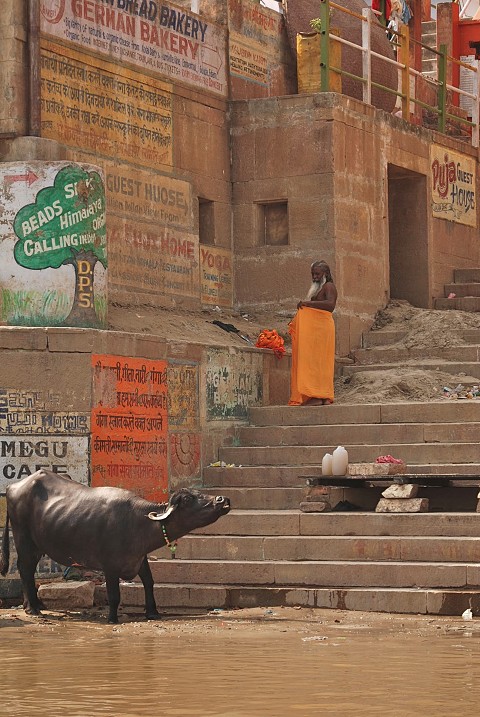
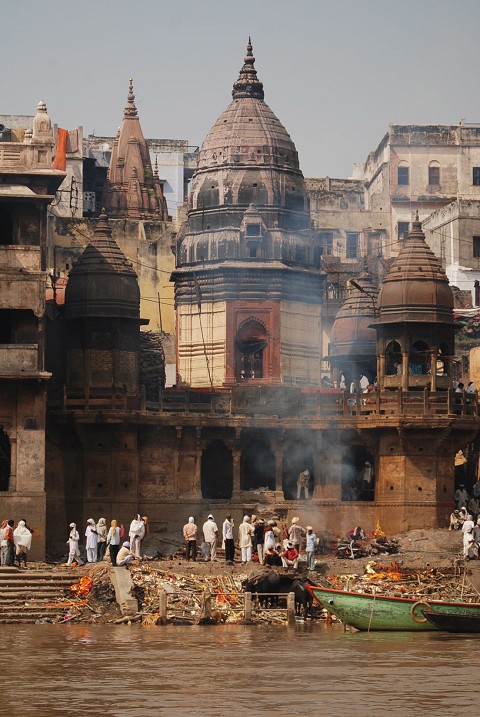
cows and Sadhu man bathe in the Ganges River riverside crematorium Marnikarnika Ghat
I do not intend to insult anyone of another religion or mock any customs with my words. Yet, as a Christian who believes Jesus to be the only living God, my heart was overwhelmed with sadness for these people. I believe that God created us with a deep desire to know and love him alone, and I feel that many are lost and looking for something only Jesus can give them. While I have compassion and respect for their religion from a historical and cultural standpoint, I also believe that they are practicing these rituals because they are looking for a secure eternity that only Jesus can provide with his salvation.
Our visit to Varanasi also happened to fall in the middle of a large Hindu festival called Durga Puja. There were many tents set up with stages full of large colorful idols, music and prayers coming from the speakers, tinsel and garland of fresh flowers draped at the entrance. People sat in chairs facing the stage, some somber in prayer & others eating, talking, and celebrating. From an aesthetic point of view, the creativity and color of it all was breathtaking, yet it felt very uncomfortable and spiritually dark for me to watch all of the idol worship.
Durga Puja is one of many festivals, but happens to be the largest celebration of the year in Bihar where we are living this month. Just miles from arriving back to GEMS, just outside of Dehri-on-Sone, we passed a huge idol taller than a football goal post surrounded by thousands of people and lots of festivities. The last night of the festival there is a huge celebration & the idols of Sikaria & Dehri will be burned and tossed into the nearby Sone River.
Psalm 96:5
For all the gods of the nations are idols, but the Lord made the heavens.
Jeremiah 10:5
Like a scarecrow in a cucumber field, their idols cannot speak; they must be carried because they cannot walk. Do not fear them; they can do no harm nor can they do any good.
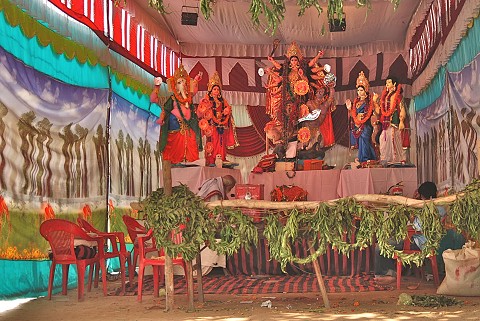
an idol tent we visited at Durga Puja festival, Varanasi
After beginning to process the affect of the day’s events, a team member brought up how seeing all of the idol worship really made him think about the idols in his life. What worldly idols do you worship? What takes priority to God in your life: money, clothes, possessions, food, your career, a relationship? If we’re honest, our eyes are too often focused on everything except for God.
Colossians 3:5
Put to death, therefore, whatever belongs to your earthly nature: sexual immorality, impurity, lust, evil desires and greed, which is idolatry.
Jonah 2:8
Those who cling to worthless idols turn away from God’s love for them.







