
 “From 1975 to 1976-through
the execution, starvation, disease, and forced labor-the Khmer Rouge
systematically killed an estimated two million Cambodians, almost a fourth of
the country’s population.”
“The killings have
started… The Khmer Rouge are executing people perceived to be a threat against
the Angkar. This new country has no law or order. City people are killed for no reason. Anyone can be viewed as a threat to the Angkar-former
civil servants, monks, doctors, nurses, artists, teachers, students-even people
who wear glasses, as the soldiers view this as a sign of intelligence. Anyone the Khmer Rouge believes has the power
to lead a rebellion will be killed.” (54)
“In the Khmer Rouge
agrarian society, only good workers are valuable, all others are expendable.”
(62)
” ‘They turned all
white, the hair on their bodies stood up and blood came out of my babies’
pores! My babies shook and cried for me to help them, for me to take their pain
away. I couldn’t do anything for them. They rolled on the ground screaming in
pain, asking me to make it stop. I tried
to hold on to them, but I wasn’t strong enough. I watched them die! I watched them die! They c ried for me, but I
couldn’t help them!’… Chong sobs loudly as the villagers put the girls in a
little hole. When she sees the villagers
cover her girls with dirt, she runs over to the grave and attempts to climb
in. Tears, phlegm, and drool from her
eyes, nose and mouth drip all over her shirt. ‘No’, she cries. ‘I’m all alone.
I’m all alone.’ Two male villagers pull her out of the grave and hold her back
until the last shovel of dirt is piled on top of Peu and Srei. When the job is
done, the villagers walk away to the next hut to dig the next grave. ‘This one
will be easier’, a man says as he shakes his head. ‘No survivors in the
family.'” (86)
“The Khmer Rouge
soldiers planted these landmines to protect the provinces they took over from
the Lon Nol army during the revolution. Since the Khmer Rouge planted so many landmines and drew no maps of
where these mines are, now many people are injured or killed traversing these
areas. People who work in these areas do not come back to the village. If people step on one and their arms or legs
get blown off, they are no longer of any value to the Angkar. The soldiers then shoot them to finish the
job. In the new pure agrarian society, there
is no place for disabled people.” (67)
“For lack of anything else to do when my body gets too sick to work in
the garden, I often watch the villagers dispose of the corpses. I see them dig a hole underneath the hut of the
dead family and cringe as they push the bodies into the hole. There were times when such scenes terrified
me, but I have seen the ritual performed so many times that I now feel
nothing.” (85)
*These quotes were all
taken from First They Killed My Father,
by Loung Ung… a survivor of the Cambodian killings.
I have tried for days to find words for what I have been
feeling for this country. How can you begin to describe the heaviness that
lingers in a country that brutally murdered a quarter of its own population,
its own people! Cambodia
is still suffering tremendously because of the genocide that took place only 30
years ago. You can feel it in the air as
you walk down the streets. Every time I
see anyone 30 years old or older, I wonder about their experience… I wonder if
they are still hurting.
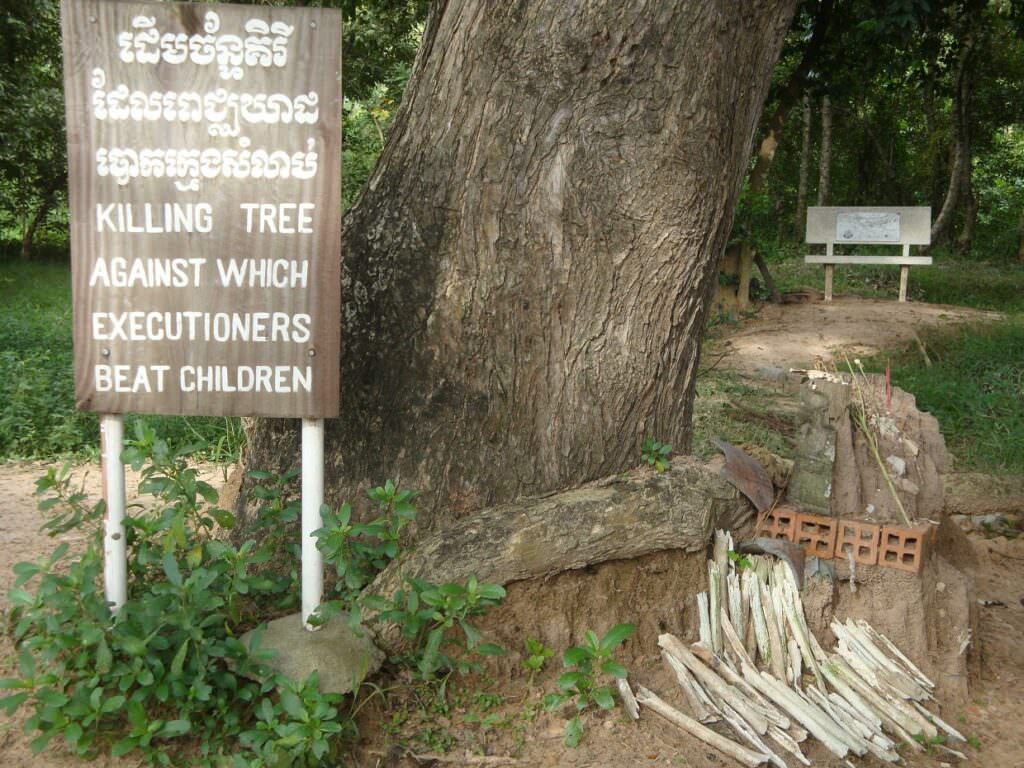
On one of our first days
in Phnom Penh,
our squad went to visit The Killing Fields, which is a mass grave from the
genocide, and S 21 Prison, which was a high school that was turned into a place
of torture and murder. It was a day of
heaviness for all of us. We walked
through classroom after classroom of tiny prison cells where many people had
been tortured and killed for simply being educated. Doctors, nurses, teachers, anyone who could
read, anyone with any kind of education, along with their entire family, were
held and killed there. No one was
spared.
Everyone from the cities were evacuated from their homes and
taken to mass grave cites to be executed. City people were educated and corrupted by the Western world. They posed a threat to the new Communistic society
and needed to be deposed.
As we walked through
the killing fields we could still see remnants of cloths coming up through the
ground. Bones are still visible on the
ground, and thousands of skulls have been collected and put into a glass
case. How does a country recover from
such terror?
Two days ago I decided that I had finally had enough of
Hermie, my pet worm who had been living in my right foot! So I went to see Dr. Scott, a British doctor
working out of Phnom Penh. While taking care of my foot, he informed me
of the corruption and pain that is inescapable all over the country as a result
of the revolution. What happens when you
take away all the educated people in a country? What happens when all the doctors have been killed?







