
(Future racers, take note!)
Our visa's were denied 8 times before we finally got into India so we were very excited to finally enter the country. When our plane landed in Hyderabad, the heat difference was the first thing to welcome us. The towns we passed along the way to Angol were comparable to that of a swarming overworked bee hive. All five of our senses were put to work immediately. Motorcycles dominated the road, and every “auto,” (cars similar to a supped up golf carts), relentlessly blared their music and honked their horns simultaneously. Little did we know, this was only the beginning of what is called “culture shock.” Here's a little bit of the Indian culture we got to experience:
Eating in India:
The same country that wipe's with their left hand, eats fire flavored everything with their right hand. Your right hand is washed before and after every meal by splashing water from a cup held in your left hand. Everyone sits on the floor in a circle, "Indian style," and hunches over their plates to eat (Indians have very strong backs). While half of us observe the other Indians to figure out what food goes on what, while the other half of us stare at each other, amused by the rice either falling out everywhere, or caught in the beards of our unshaved men. While everyone eats, one or two ladies stand(s) in the middle of our circle. They manage the bowls of rice, spices, and different sauces, constantly keeping eye on everyones plate. At the dinner table in America we call to have the potatoes passed to us, and we dish our own food onto our plates. In India, you are expected to do nothing, but sit and eat. Furthermore, you have no portion control. Actually, you don't have control over anything. If you start to finish any of the items on our plate, they don't miss a heartbeat to dish you out more. If you don't want another scoop of rice, you have to fight every time. Meal times are usually around 10:00 am, 1:30 pm, and 10:00-11:00 pm. The Indians ALWAYS insist that we eat inside their home (its more proper). These homes feel twice as hot than the actual temperature outside, and you will look like you just got out of the pool by the time you're done eating. People burp out loud regularly without an excuse, and we maintain stomachs full of rice. All day.
Plumbing, waste, and smells of India:
India smells. There is no waste system. I have not been in one home that has a trash can, nor have I seen one, ever. Trash is thrown guiltlessly, anywhere and everywhere. Piles of heaping trash stretch for miles in many places in town. Random piles of trash can be found in the entry ways of restaurants, stores, and walk ways of three story buildings. There is an empty lot on the right of the church we're sleeping in where our trash (…and our 'business') has been building up. Speaking of, India has very different ideas about plumbing. There are no toilets (that i've seen); there are no sinks. While some are nicer than others, a simple hole, (or "squatty potty"), in the ground serves as a restroom. It is flushed by throwing a bucket of water down the hole. The water then runs down a simple drain that leads into the streets somewhere. The water often joins an area where trash has also collected. Buffalo, Goats, and sheep roam freely. You cannot walk through the market without having to weave through a random herd of goats, or a buffalo chilling in a puddle of mud. Taking a simple 10 minute trip to the market without having to stop for a heard of buffalo has never happened. All this being said, the smells of India are trash, rotting wet trash, burning trash, stagnant water, sewer, food waste from restaurants, and poop. Then there are more pleasing smells like curry, jasmine from the girls hair, and burning incense.
Hospitality
I have never experienced or imagined hospitality like the Indians provide. Shoes are removed before you enter any room whether it be a home, store, or church ,etc. People bow, palms together, saying "nomaste" upon every greeting. When we entered a village, the red carpet was laid out for us. We didm't wait longer than 5 minutes before the people had gathered enough chairs, or cots (beds) for us all to sit on. Blankets, were always thrown on the cot before we sat, and matts were laid down before we sat to eat. Quests are first priority at all times. We were served cold drinks (sodas) after chai tea, after buffalo milk, and then cold drinks again. They refused to let us sit on the floor (even if we really want to), and forced us to lay down if we looked tired. Families are judged within the village based upon the hospitality they give; making it a very serious matter. Two families in a village we were staying at actually broke out into a fight that lasted about three hours over who was supposed to be feeding us. Future racers: only accept food from the house you are staying at unless you're able to eat two meals back to back.
Modesty, and Style
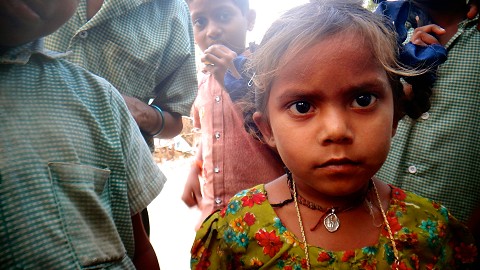
Don't be fooled by the appearance of the streets. Hygiene, style, and appearance are very important to the Indian people. They are very modest, and they maintain a very classy appearance at all times. While men have a more lenient dress code, the preferred attire is pants, and long sleeved, collared shirts. Men get away with wearing “loongie's” (imagine boxers..but as a knee length skirt) on more casual days. Women, on the other hand, are expected to cover their ankles, shoulders, and cleavage (anything below the neck) at all times. Their outfits looks identical to the outfits I had in my costume box at five years old; bright, multicolored, with intricatly sewn flowers and other designs, and bedazzled with gems, beads and sparkles. They're expected to wear sari dresses (which includes a cotton ankle length slip, a blouse, and about 15 yards of wrapped fabric), but punjabi's have recently become more acceptable if a woman prefers to wears pants. Pants are only appropriate if both the woman's bottom and front side are covered, and the breast curves and neckline are hidden with a scarf. Women are very showy with their gold and silver. They are heavily decorated in gold earrings, necklaces, bindi's, rings, bangles (glass bracelets), and jangles (silver anklets with bells). A woman's hair is also imperative to her femininity. The longer the hair, the more attractive. However, it is too sensual for a woman to let her hair go freely. In other words, her hair must always be pulled back, or in braids. The older the girl, the more hair she is allowed to let loose from her braids; representing maturity. Women assist each other in doing their hair due to the difficulty in combing hair that is past your lower back. Jasmine flowers are worn in their hair regularly.
Paparazzi
Being Caucasian, we maintained a paparazzi the entire duration we were in India. We couldn't avoid causing a traffic jam longer than 10 minutes of being in town. There's wasn't a moment that there wasn't someone watching us. When I needed to use the restroom, younger girls would follow me. People would take pictures of us from the windows of the church we stayed in, or just bravely walk in and ask to take a picture with them (or 10 pictures). Not only were people taking pictures, but they were sharing them too. We were in the newspaper, on the desktops of a computer we used in the internet cafe, and a boy my age was so kind to show me that he had set his phone's wallpaper to my facebook profile picture (don't share your full name, duh). I have woken up in my tent twice to see three (adult) Indian's standing over my tent watching me sleep twice. I have two kids peering over my shoulder as I type this blog. While this is sort of flattering is ways, more so, it is extremely tiring.
This is only my fourth month on the race, but India has definitely been my favorite country. The culture is so different than anything we've seen. Though it's been hard trying to adapt, it's been an overall eye opening experience. If you don't let the hard living conditions get the best of you, the people are precious, and they will surely steal your heart. I am really going to miss India, and have already been wrestling with the thought that God might call me here (Lord have mercy). Note to future racers: buckle down and start praying about your month in India now. It'll be hard, but God has a lot in store for this country, and it's humbling to see the many different ways He reveals himself to the Indian people.







