
During our stay in Phnom Penh, Cambodia we heard a lot about the genocide that took place under Pol Pot in the 70s. We watched a documentary about S-21 before we went to visit the museum site. Here is some of the information that I learned.
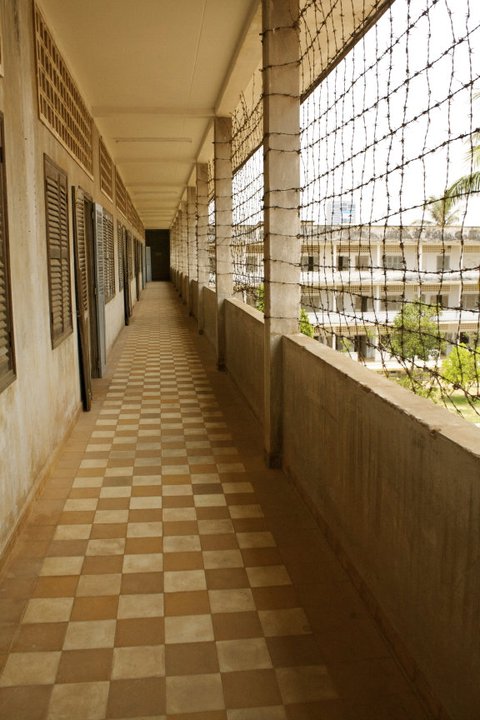
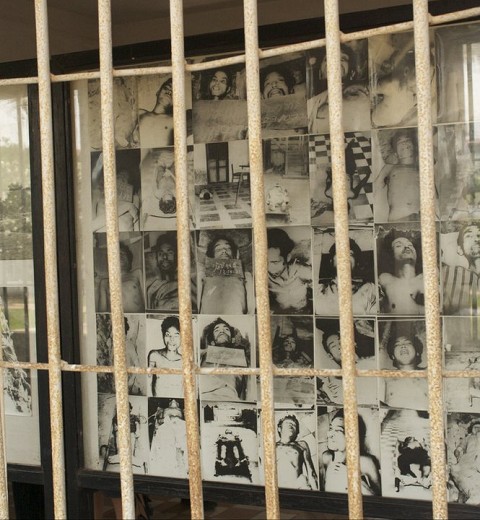
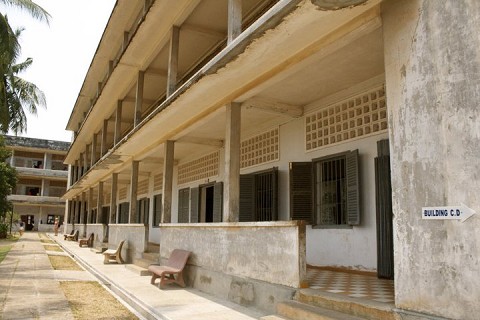
S-21, was located in the abandoned suburban Phnom Penh high school of Tuol Sleng, which ironically translates to “hill of the poison tree.” To workers assigned by the Khmer Rouge to the Tuol Sleng neighborhood, S-21 was known simply as konlaenh choul min dael chenh – “the place where people go in but never come out.” Tuol Sleng’s reputation was brutally accurate: the sole purpose of S-21 as to extract confessions from political prisoners before they were taken away for execution outside of the capital near the farming village of Choeung Ek. Nearly 20,000 people are known to have entered Tuol Sleng; of these only six are known to have survived.
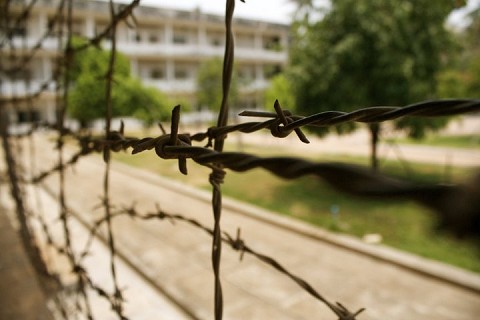
From the moment you arrived as a prisoner at S-21, your rights and responsibilities were made clear by a set of ten security regulations. These rules dictated how you acted, how you responded to questioning, and how you had no choice but to accept the fact that you were a traitor and would be treated as such.
1. You must answer accordingly to my questions, don’t turn them away.
2. Don’t try to hide the facts by making pretexts this and that. You are strictly prohibited to contest me.
3. Don’t be a fool for you are a chap who dare to thwart the revolution.
4. You must immediately answer my questions without wasting time to reflect.
5. Don’t tell me either about your immoralities or the essence of the revolution.
6. While getting lashes or electrification you must not cry at all.
7. Do nothing, sit still and wait for my orders. If there is no order, keep quiet. When i ask you to do something, you must do it right away without protesting.
8. Don’t make pretexts about Kampuchea Krom in order to hide your Jaw of traitor.
9. If you don’t follow all the above rules, you shall get many many lashes of electric wire.
10. If you disobey any point of my regulations you will get either ten lashes or five shocks of electric discharge.
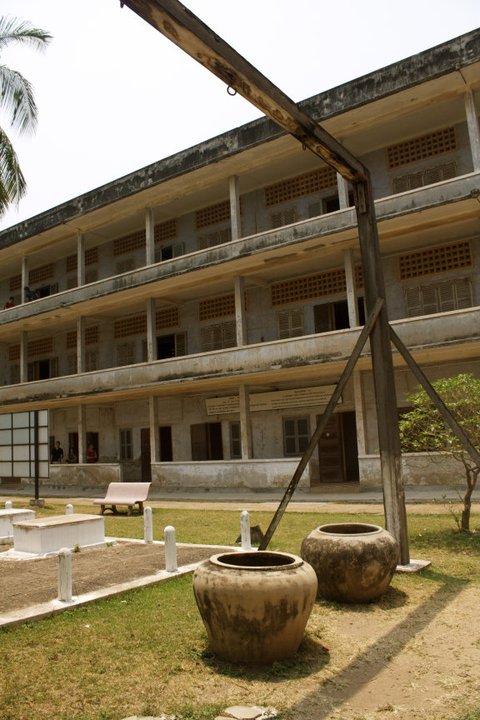
The methods of extracting confessions at Tuol Sleng were cruel and barbaric. Prisoners were tortured with battery powered electric shocks, searing hot metal prods, knives and other terrifying implements. For example, in the prison courtyard stood a large wooden frome once used by students for gymnastics practice. The Khmer Rouge converted it into gallows for the hanging torture and execution of prisoners. Though many prisoners died from the constant abuse, killing them outright was discouraged, for it was much more important for the Khmer Rouge to get confessions on paper first. As part of its quest to wipe out traitors, the Khmer Rouge leadership sought to “investigate their personal biographies clearly” in order to get at what caused the prisoners to become traitors as well as to find out who their co-conspirators were. Over time they were tortured as necessary in order to extract whatever confession was needed.
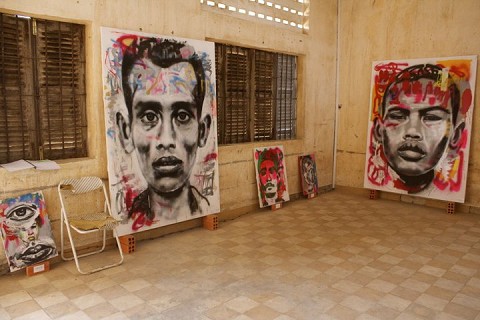
Confessions were an arbitrary concept – in truth, the vast majority of S-21 prisoners were probably innocent of the charges against them, so therefore most prisoners’ admissions were lies borne out of excessive torture. Even loyal Khmer Rouge cadres would eventually admit to spying for the KIA or the KGB, secret loyalty to the Vietnamese, – whatever the interrogators asked for they usually got. It was only a matter of time before the torture would break even the strongest of prisoners. The dubious nature of the confessions mattered little to the Khmer Rouge leadership; like the Salem witch trial of puritan Massachusetts, each confession fanned the fires of conspiracy by offering new names (and people) to target. Because prisoners would often name names in their forced confessions, the confessions served as a misguided, but self-fulfinning prophecy to the Khmer Rouge, allowing them to prove to themselves that there was indeed a massive web of traitors among them.
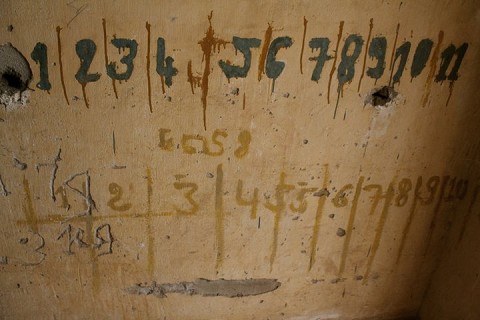
It was a very sobering experience to visit the site where all of this took place. You could still see the stains from the blood and just imagine the terror that the people who were forced into that place must have felt. It was a very dark but informative experience. Even just being in Phnom Penh you could see the affects from the genocide. The majority of people in Cambodia are young because most of the older educated people were targeted during the Khmer Rouge. The older people that you do meet have incredible stories.
One of the mothers of a girl we worked with during the month is a survivor with the scar on her head to prove it. They didn’t want to waste bullets on the people that they killed during the Khmer Rouge so many were “smashed.” Basically hit over the head with heavy objects or clubs and thrown into a pit. This woman had been hit over the head and tossed in. However, the blow wasn’t fatal and once the men had left she was able to climb out of the pit of bodies and escape. She still has terrible headaches resulting from that experience.
Many people fled to Thailand. However Thailand would tell them they were taking them to a refugee camp but instead drop them back at the border and force them back into Cambodia. A woman we were able to do ministry with one day walked all the way from the Thai border to Phnom Penh. The biggest problem being that the path led them through mine fields and often the way would be scattered with those unlucky people who located a mine.
Most stories like these, are heartbreaking and dreadful. However, it has been so apparent during our month in Cambodia that God is at work in that country. That He is fighting for his children there and has such a desire for them. It was so refreshing to see a country hungry for the word. I am so excited to see the change that will continue to take place in Cambodia. It is truly a beautiful thing.







