I never think of how homesick I will be when I decide to leave home, indefinitely or for a shorter period of time. Well, since I’ve been on this race I’ve had momentary, yet overwhelming waves of homesickness. When I look around at the place that is supposed to make up my new ‘home’, and the people who are supposed to be my new ‘family’, I’m sometimes very disappointed at not having my REAL family and friends surrounding me. Don’t get me wrong, I’ve been blessed to have the team I have (we are the best team on J squad by the way), AND this month I have been blessed to have a piece of my real family (my cousins are our contacts). Despite the blessings I’ve received, I still have suffered from at least a half a dozen of these ‘waves’ of sadness for missing home.
Usually these moments are halted by the thought of those we were brought here to serve. We are here working with some amazing children who have been abandoned by their parents. ABANDONED. No ‘home’ to go back to, no ‘family’ to bring them comfort when the rest of the world is harsh. These things that I hold as my greatest source of comfort don’t even exist for these children.
These kids are gypsy children whose parents range from young mothers who have no form of income to care for them to prostitutes who simply have too many children to care for. One story I heard was of two sisters whose mother actually lived right across the street from the children’s home (called Shalom House, one of the houses of Oaza). She one day came to the director of this house and said I’d like my daughter back, but she only wanted the one girl.
Can you imagine? Your own mother abandoned you and then when she finally returns, she would only like to take your sister back home with her. The gypsy mother’s believe that giving their children to Oaza to care for is a privelage of Oaza, rather than realizing their own failure at raising them in a safe environment. It’s only been in the very recent years in Romania that there has been any form of social services to regulate these group homes and mothers, but now there are rules that protect the children from having to go back to a home where they aren’t fed or bathed or sent to school.
Unfortunately, most of the children who are in group homes like these are never given up for adoption, never given the chance at a normal life with parents who love them. Not only is it very uncommon for a gypsy mother to give up her rights to her child (whether she wants them or not), but most Romanian citizens (non-gypsy) do not want to adopt a gypsy child. Not to mention that international adoptions have been outlawed because of child sex trafficking problems. Gypsies, in general, are viewed the way African-Americans were viewed in America in the 1950’s. Most gypsy children, in group care or not, have little hope for a real future. Getting a good job for a Romanian is difficult, but for a gypsy, much more difficult because of racial discrimination.
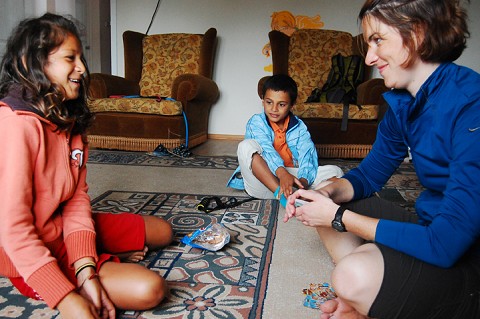
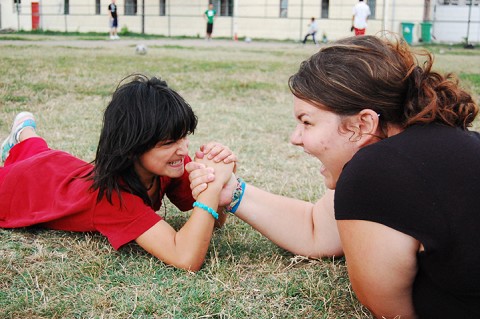
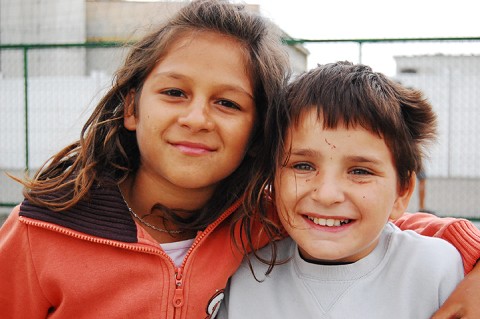
Here are some photos of the kids we’ve been blessed to live with and get to know the past few weeks.