OK so I’m just joking about the crystal ball, but I thought it somewhat appropriate since this “glimpse into the future” blog is really all about what’s to come for Kiatera’s ministry this month amongst the Gypsy (Romani) people of the Transylvania region of ROMANIA!
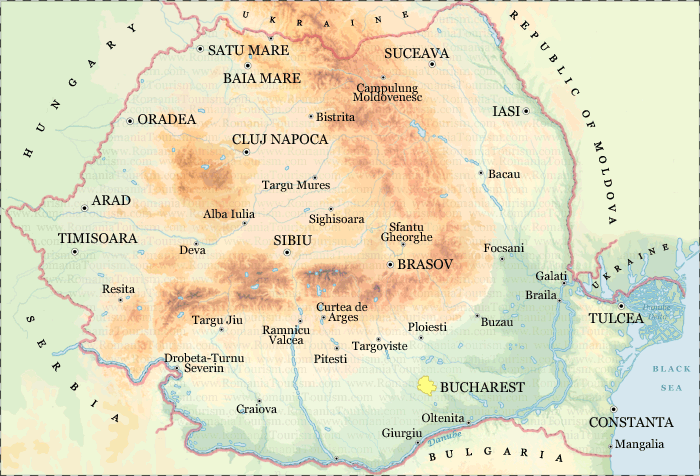 Starting Sunday or so (yay Easter!) my team will be moving out to a little Gypsy village called Viile Tecii. The nearest locatable town is a medieval town called Bistrita, which dates back to the year 1264, though archealogical evidence shows inhabitation since the Neolithic era! Kiatera and Brian & Stacy Alonzo will be living in the home of a local Gypsy family who speak a little English but not too much. Ministries may include preaching, Bible studies for new Christians,
English classes, kids programs, painting a kid’s mural, kindergarten visits, orphanage visits, and more. We will truly be immersed into the Gypsy community… living with
them (dancing too!), eating with them, ministering to them and alongside them.
Historically, the Gypsy community has been oppressed throughout Europe. Because of the racial prejudices against them, many gypsies still live in extreme poverty. Team Pi did the pioneering for our squad, and Dre, Pam and Steph Fisk gave us a report about Viile Tecii. Many homes there are still of the ‘corrugated tin roof with an outhouse out back’ type that we didn’t really expect to find in Europe. Despite extremely frigid weather in the winter, many of these homes lack basic necessities.
Reliable sources quoted on Wikipedia say this about the Romani (Gypsy) people:
When the Romani people arrived in Europe, curiosity was soon followed by hostility and xenophobia. Romanies were enslaved for five centuries in Wallachia and Moldavia until abolition in 1856.[43] Elsewhere in Europe, they were subject to ethnic cleansing, abduction of their children, and forced labor.
During World War II, the Nazis murdered 220,000 to 1,500,000 Romanies in an attempted genocide known as the Porajmos.[44] They were marked for extermination and sentenced to forced labor and imprisonment in concentration camps. They were often killed on sight, especially by the Einsatzgruppen (essentially mobile killing units) on the Eastern Front.
…Amnesty International reports continued instances of Antizigan discrimination during the 2000s, particularly in Bulgaria, Romania, Slovakia,[59] Hungary,[60] Slovenia,[61] and Kosovo.[62] Romanies are often confined to low-class ghettos, are subject to discrimination in jobs and schools, and are often subject to police brutality.
We World Racers have a unique pioneering opportunity this month. Living and ministering in a post-Communistic, oppressed people group, we get to represent Christ to those who may be familiar with His name, who may even profess Him as their God, but who have no personal, intimate relationship with Him or knowledge of His great love for them. Please pray for us to approach the culture with the humility of Christ, the humility of a servant, and come only in love to the Gypsies. Pray for God’s Kingdom to come to Transylvania, to Romania, and to Eastern Europe as a whole!