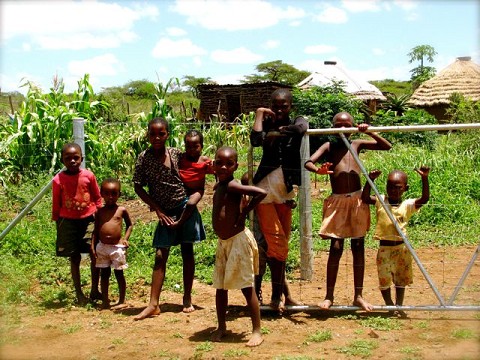
A country is dying.
If something in Swaziland doesn’t change, at the current negative growth rate of population, the SiSwati people will be extinct by the year 2050. AIDS is stealing life, physically and emotionally and spiritually. The cloak of
hopelessness suffocates those left behind with fear and desperation.
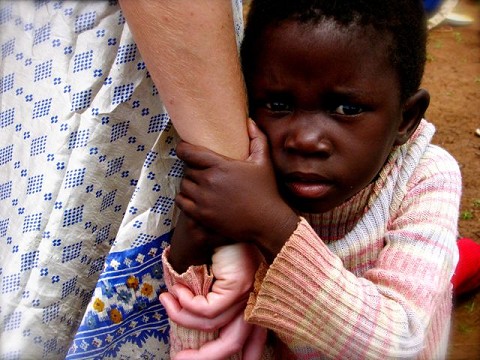
Many children have forgotten how to smile or play. All they can do is
cling to the closest hand offered to them.
In Matata, the shopping centre nearest to Nsoko, there is a post office, dry cleaners, supermarket, petrol station, cafe and a coffin store. I’ve heard it said that there is a shortage of skilled labor in the form of carpenters because there are too many coffins to build and not enough builders of coffins.
Swaziland is dying, and its people don’t have the power to stop it themselves–in their present state. They need to be empowered to believe that they can actually change their own lives, their own villages and their country.
They need to be told that they are the ones responsible for saving Swaziland.
There’s a deadening cycle of poverty that sucks bones dry and leaves them to rattle. Swaziland’s death cry is more of a death whisper, and it’s usually preceded by the death sentence: HIV+. Those with the determining disease fall on the far side of the line. It’s something everyone is reluctant to talk about, but nearly 50% of the people are living and dying with. Thousands of children, orphaned because their parents died from AIDS, have never been tested for the disease–maybe because it’s assumed they have it.
Those with the + resign themselves to their fate with a hopelessness thicker than anything I’ve ever encountered. One World Racer, after meeting a very sick HIV+ woman and her baby, was offered something out of sheer desperation.
“When I get sick, I won’t be able to take care of my baby,” the mother said. “I want you to have him as a gift.”
The mother/father generation is dying the fastest, leaving behind the children and the grandmothers (go-go’s). The go-go’s are left to raise their grandchildren, and the children are left to work the farms to get food to eat. Only those with a little money for the fees and uniforms can afford the luxury of time in attending school (instead of trying to scrounge up money or food on the farm). So the children with no parents can’t go to school, and thus when they get old enough they have no skills to offer the job market and thus can’t get work. The workers of Swaziland are dying, and the job market is thus drying up–yet strangely, those who need jobs often can’t find them. A vast majority are just struggling for sheer survival: food, water, shelter.