
The Road to LaButta was supposed to be closed to us. We were white Americans who were unaffiliated with any NGO. We had so little, materially, to offer the people of the delta.
Fifteen hours in a 70s-era van over the bumpiest, most potholed roads I’ve ever traveled over–not a single minute went by without braking hard or bouncing over a huge hole–brought us to the city of LaButta, the largest city in the Irrawaddy Delta. The area lost about 80,000 people when Nargis blew through six months ago.
We weren’t supposed to be there.
Since Nargis hit this past May, only Burmese government officials and a few NGOs were allowed to go into the delta. Aid workers only. No tourists.
Until we arrived.
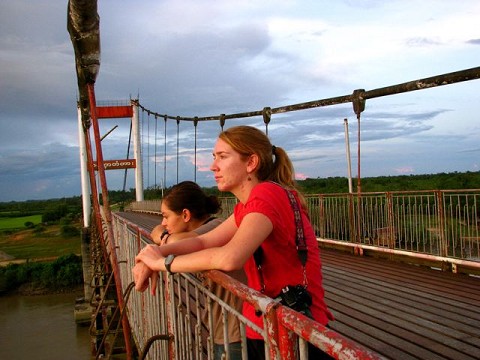
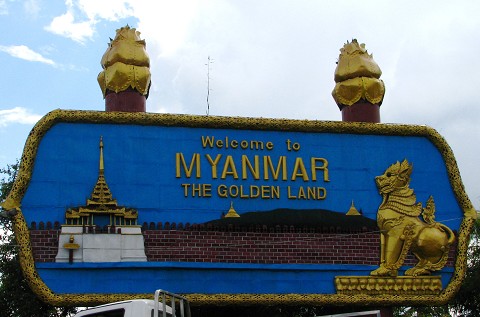
We weren’t supposed to be there, but we came anyways, as the first white American tourists in the delta in six months. The first non-NGO travelers. The government gave us “permission” to come as tourists, after all–provided we travel with a “government guide” and pay a fee. Why did they let us come? Well on a human level we aren’t really sure. But I know who my God is.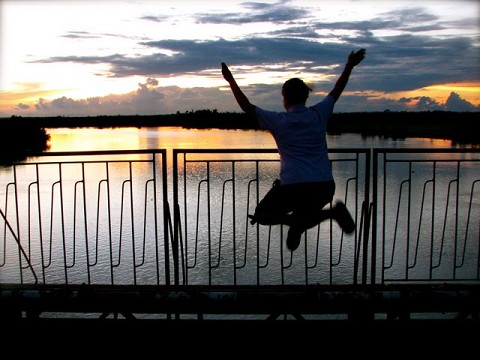
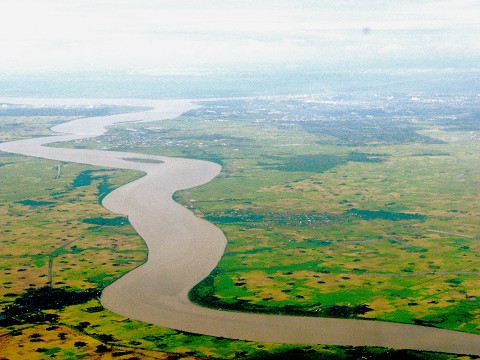
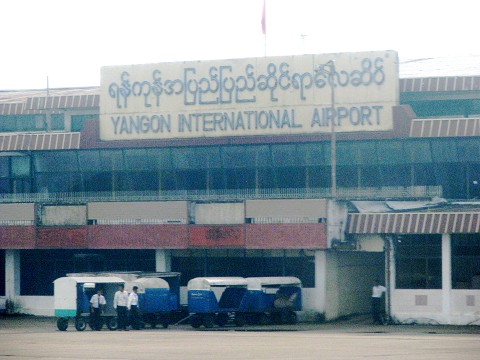
If they had known how little money we had to offer the area, they probably would have sent us packing back to Yangon. But as tourists we came with our backpacks and cameras and bug spray, and we sweated and snapped photos and saw with our own eyes the river that Nargis possessed on that dark howling night six months ago. The river that stole lives and stole food, stole happiness and stole souls.
We weren’t allowed to the area without “permission” and a “government guide.” Turned out our government guide wasn’t even the biggest supporter of his own government, either–he never spoke directly against it, because that would have been blasphemy, and if he had been caught he would have been in some hot water.
But on the road to LaButta he showed us the way.
 The road to the delta was long, hot, bumpy and wearying. At one point the ancient van ground to a halt after a particularly jarring rut. “Ah, we get out and push,” said our translator. So we got out and pushed the van. It started again, we hopped in, and went, chuckling, on our World Race way.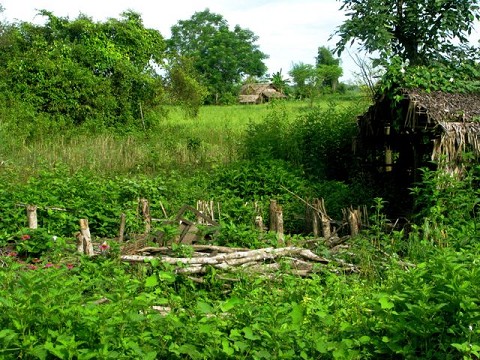
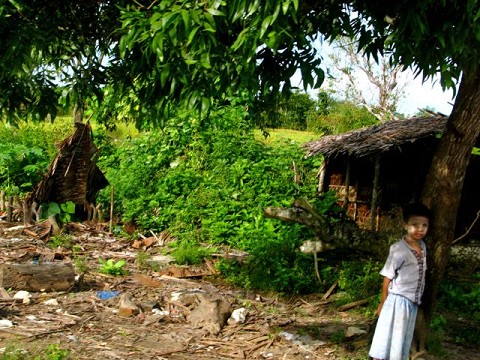
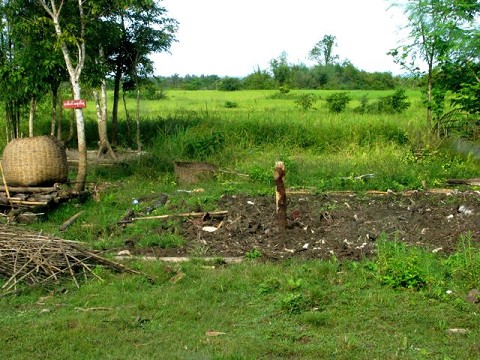
By the time we got to the delta on the way down, it was dark and we couldn’t see the scenery. But leaving the area four days later, we discovered that the road to LaButta is lined with the remnants of wooden houses (in the
States they would have been called shacks) that had been blown away by
Nargis.
States they would have been called shacks) that had been blown away by
Nargis.
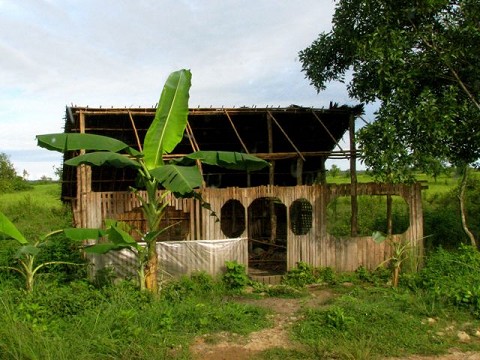
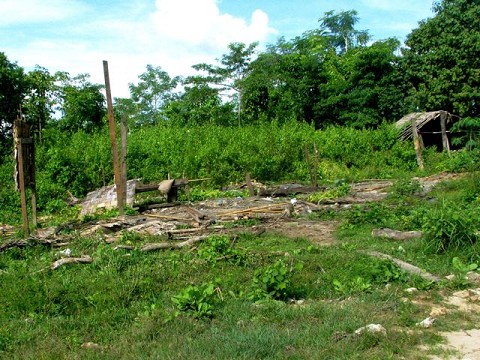
Some were still being lived in, with tarps over their bamboo-woven roofs. Many were in shambles on the ground.
I hopped out of the van once to find somewhere off the road to relieve myself, and found myself literally on top of another destroyed house. Suddenly I noticed an older woman sitting in the rubble of the house. “Minglaba,” I said, greeting her in Burmese. Bamboo rods and woven mats were scattered over the old site, and all that was still standing was a huge water jar, the kind you find outside most village houses in Southeast Asia. The woman kindly pointed me to the back of the once-house, where larger bushes would hide me from any passers-by.
When I walked back to the van I felt ashamed at my inability to
communicate to this woman just how sorry I was that her home was lying
in ruins before me and I had nothing to offer her.
communicate to this woman just how sorry I was that her home was lying
in ruins before me and I had nothing to offer her.
“Jezu-dem-ba-dey,” thank you, I said with a smile, picking my way over the rubble of her home.
We weren’t supposed to be there. But the road had been opened.
 For who is God besides the LORD ?
And who is the Rock except our God?
It is God who arms me with strength
and makes my way perfect.
~Psalm 18:31-32







