
Ever since I have had a desire to come to Africa, which has been for as long as I can remember, I have had a dream.
My dream was to meet and visit a village of the Maasai Tribe.
The Maasai tribe reside in Eastern Africa, primarily in Kenya and Tanzania.
Upon arrival in Tanzania, I have seen several Maasai people walking around. My excitement and desire to spend time with some of them only increased as I saw them in their beautiful traditional clothing and jewelry.
We headed to rural villages the first weekend here and I had high hopes of meeting some Maasai.
We arrived at the pastors house, where we would be staying in the village, and settled into conversation with him.
A few minutes later a visitor arrived.
Her name was Elizabeth and clearly a Maasai women.
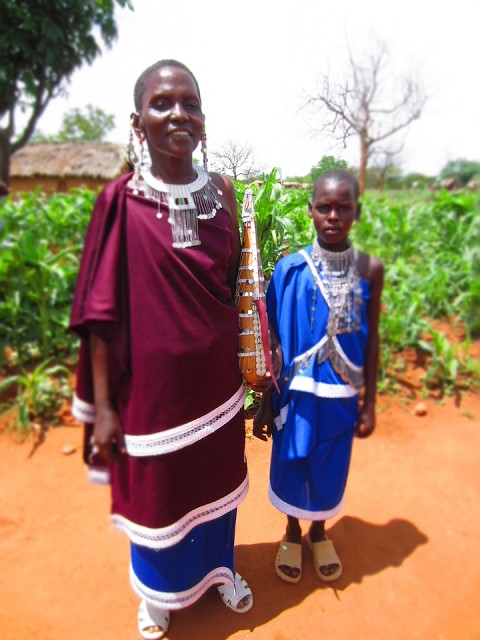
We chatted with her for a while that evening, learning about her family and culture.
Over the weekend she was our most frequent visitor, usually bearing various gifts:
milk from her cows,
candies,
traditional maasai bracelets for each of us.
Elizabeth is a women I will never forget.
Her hope was inspiring,
her faith was encouraging,
her generosity was humbling,
her beauty was captivating.
She glowed, despite the hardships she faced.
She remained joyful, despite the loss she had experienced.
She shared the gospel, desiring her tribe members to know God personally and turn from their sinful ways.
She is a daughter of Christ
and she has a confidence of who she is in Him.
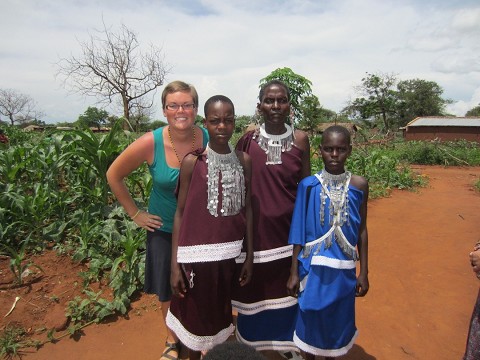
Some things we learned about the Maasai Tribe:
– They are known for their rich traditions.
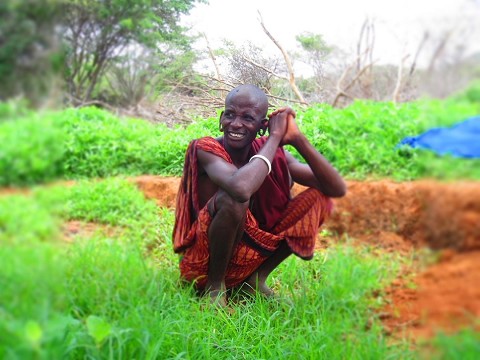
– Man typically wear red outfits.
– Women typically wear purple and/or blue outfits
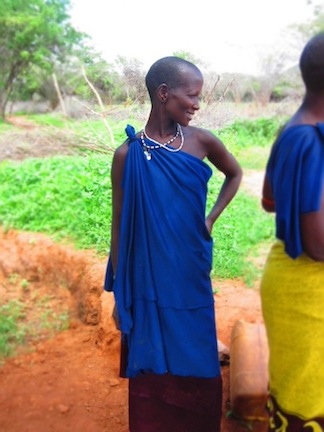
– In the earlier generations before integration into modernized villages, they would stretch/gage their ears primarily for jewelry wearing purposes.
– In older generations, boys used to become men after killing a lion in the wild with just a club.
– Today men still carry a club and machetes on their belt, but only for dealing with wild animals or tribal fights.
– They highly value cattle and find it really important to care for them well. Because of this, they live out in the bush away from other so that they have plenty of room for their cattle to graze.







