
This month, Team Woven (Along with 2 other teams – Altogether making Team Wooly Mammoth) is located in Ulaanbaatar, Mongolia.
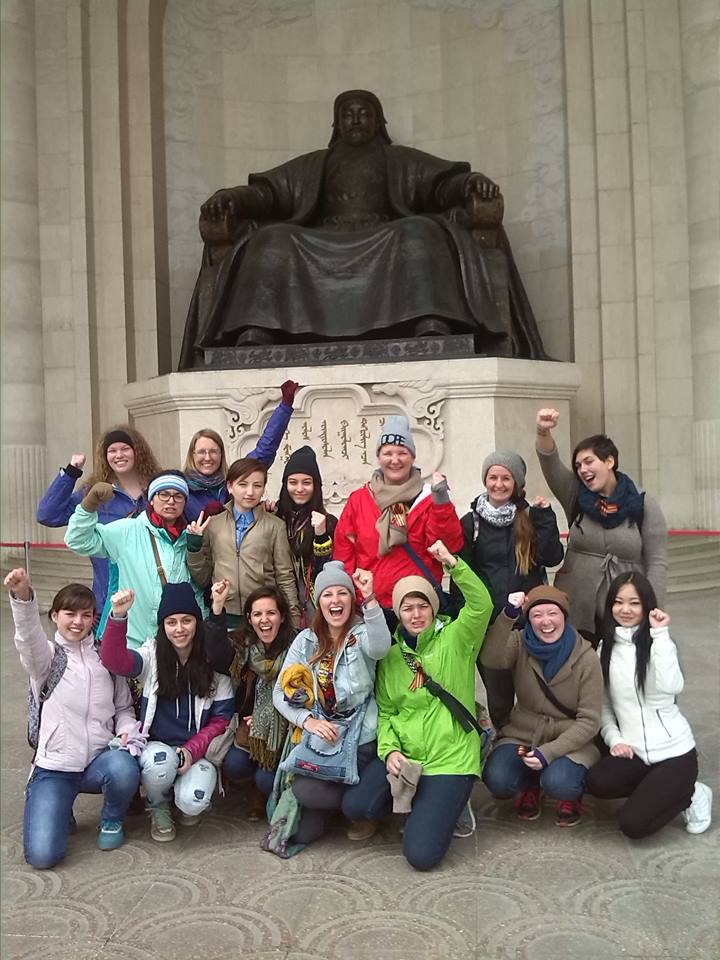
10/17 of the members of Wooly Mammoth, with some of our new Russian Friends in front of the Chengis Khaan statue in UB City
Team Wooly Mammoth is working with Cross of Love church. Cross of Love is a church plant in UB city that has planted 30 other churches throughout the Mongolian countryside. We spend our days strategically exploring the city of Ulaanbaatar, seeking to make connections and build relationships with young people. Our goal is make friends and invite them to join the evening events that are hosted at the church each night, where they can connect with the young adults already a part of the church and encourage long term relationships. Evening events including a game night, 2 English conversation nights, an open mic night, and a night of worship. So far we have been able to invite quite a few young adults, both international students and Mongolian nationals, and get them connected with the church’s young adults.
Along with making these connections, we have also been learning a lot about the country, culture, and language. Ok, so the language is incredibly hard, but we are trying! Here are a few interesting tidbits about Mongolia that you may not know! Enjoy!
1. Did You Know: The population of the country of Mongolia is around 2.9 million, but the population of Ulaanbaatar (the capital city) is around 1.3 million. That’s 45% of the country’s population living in one city!
2. Did You Know: Approximately 57% of the population of Ulaanbaatar (750,000) live in the low income “Ger” District on the hills surrounding Ulaanbaatar. Most homes in the area have no running water, sewage system, or electricity.
3. Did You Know: The Mongolian version of milk tea, “Suutei Tsei”, is unlike ANY other milk tea found in Asia? Most Asian milk teas are a fairly even ratio of milk with tea, and are generally very sweet. Usually the spices or flavoring (and sometimes color) of the tea only slightly varies from country to country. In Mongolia, however, milk tea is predominately milk with a hint of tea, and it is very salty. Yes, SALTY!
4. Did You Know: Most things you buy in a store, and even in many markets in Mongolia, with the exception of local dairy products, beef and mutton, and some wool products are ALL imported. This includes almost all clothing, food, all toiletry items, and most household/cooking items. (Side Note: The one thing I can appreciate is that Mongolians know how to make some cheese! And while it is still expensive, it is generally within budget to be used for meals if we work the budget right. PTL!)
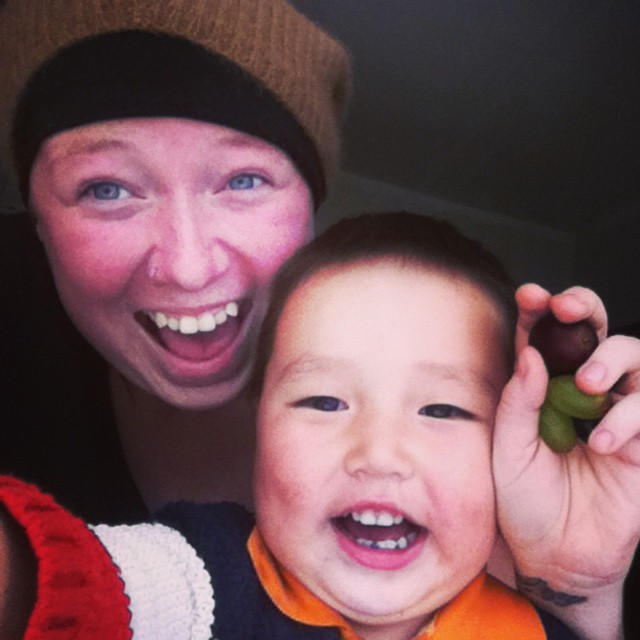 A pint sized Mongolian friend, who loved to share his grapes. All of which were probably imported, and most likely expensive!
5. Did You Know: The Mongolian language has strong ties to the Russian language. Both written languages use the Cyrillic alphabet, and the Mongolian language shares a lot of vocabulary and pronunciation with the Russian language. (Team Wooly Mammoth Observation: Mongolian sounds like Sid the Sloth tried to speak a mix of Russian, Dutch, and Parseltongue.)
6. Did You Know: The Rice:Veggie/Meat ration is completely opposite to everything else we have experienced in Asia. Most of Asia, as we have experienced it, will give you a very LARGE portion of rice, with a small side portion of sauce, veggies, and/or meat. In Mongolia, however, we have received heaping portions of meat and veggies, with a very small portion of rice. (Personally, I’m in love!)
7. Did You Know: Meat is a big deal in Mongolia! If you have frequented any mall food court, you have probably heard of “Mongolian Beef”. While I haven’t found anything like America’s version of the Mongolian Beef dish, I have found that Mongolians love their beef in abundance! Beef and Mutton are two things that do NOT have to be imported into the country, and they take full advantage of it. Meat portions are more than hearty here. If you want chicken, however, expect to find it in the frozen imported section of a grocery store – it is small portions and it is expensive! The only chickens that are raised in Mongolia are usually only for egg producing purposes.
8. Did You Know: When an older Mongolian “grandmotherly” figure greets you, it is polite to hold her elbows and allow her to sniff you. Yes, you read me.. sniff you. They will touch your cheeks on both sides similar to a European kiss, but instead of making a kissing noise, they will sniff you. It is simultaneously hilarious and endearing.
9. Did You Know: Books should never be placed on the floor, and should be placed on the highest shelf available. — This one in particular has been interesting for us, considering there are 20 people, most of whom are consistent readers, sleeping on a church floor with no shelves, and only a few tables. It is now part of our morning routine to go through and pick up all the books and journals that have been placed beside our beds after reading or journaling at night or first thing in the morning, and putting them away before church staff arrive.
10. Did You Know: Mongolians do not need a Visa to enter China, Russia, or North Korea – You can only imagine the possibilities this opens up for the body of Chr1st in Mongolia, allowing them free and welcome access to places that no other nation has. This places Mongolians as the ultimate “M’s” for these regions, and they are taking full advantage of it!
11. Did You Know: Mongolians have been able to reach many “unreached” people groups that both Western AND Eastern M’s alike have been unable to reach. Mongolians are being welcomed, accepted, and trusted by unreached people groups throughout China, Nepal, Tibet, and across most of Asia. So as revival slowly begins to rise in individuals and churches across Mongolia, they are spreading their embers across much of Asia – into places that you or I could never dream about going.
Our time in Mongolia has been both insightful and interesting, but most of all it has been exciting. We are getting a front row seat this month for what the Lord is doing in and through the Mongolian people, and the rest of Asia. It is an incredibly humble position to be in, and I’m excited to see what else we will learn, see, and experience for the rest of our time here in Mongolia.
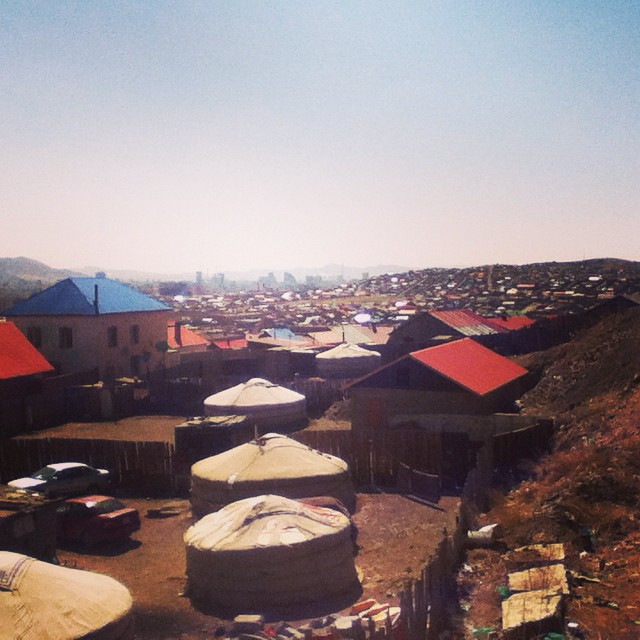
A view of the Ger District, which fills the hillside framing UB city. 57% of UB’s population live in this low income “district”







