
While in Phnom Penh, we visited the Killing Fields Memorial. To the naked eye, it looks like a plot of land on the outskirts of the city. As we stepped through the gates, we began to realize the extent of Cambodia’s past. The killing fields were used primarily to murder a large number of Cambodians, followed by disposing of their bodies in shallow graves. Over 20,000 mass graves sites have been found throughout the country, indicating that there were over 1.3 million victims from the killing fields alone.
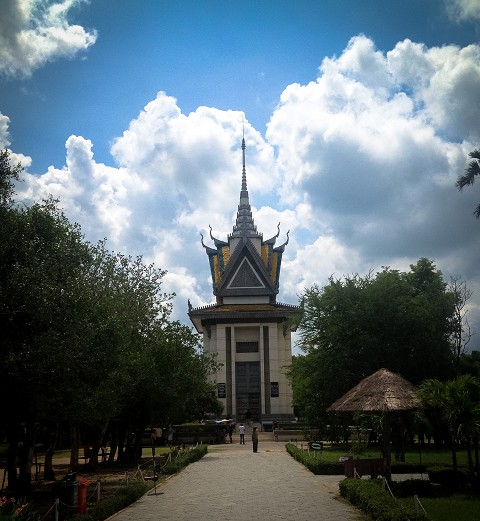
We were given headsets so we could receive and audio tour of the grounds. We heard about people who were brought in by the truckload from all over the country and held in large one-room buildings in complete darkness with no food or water. During the day there was a deafening silence as prisoners sat bound together awaiting their unknown fate. When nightfall came, the grounds were filled with the sound of propaganda music. This was played to muffle the sounds of screams from those being slaughtered. You see these men, women and children were not executed they way you might imagine. Guns were not used, as bullets were far too expensive. The brutality experienced here was of a far more sinister nature. The guards used whatever tools they could find to hack them to death. One by one they were made to kneel in front of large pits that would soon be their graves. Hammers, Hoes, Axes and other large metal objects were used to inflict death with a single blow.
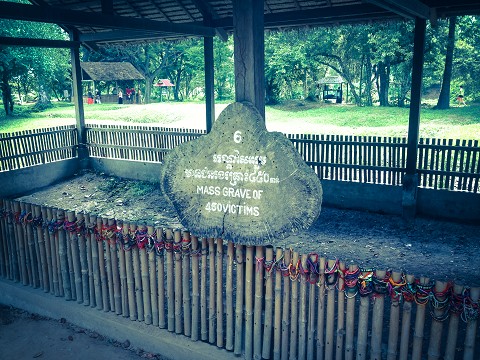
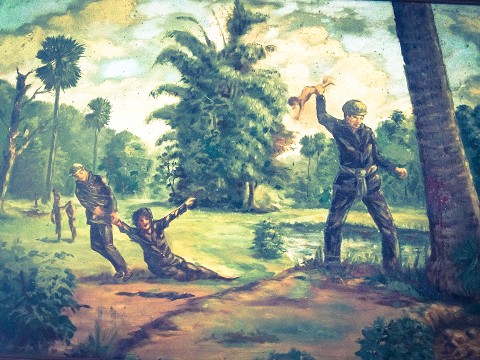
Near the center of the property we saw a large tree to the left of one of the graves. This tree has been named the killing tree. The killing tree is the tree that guards would use execute infants and children. There were first hand accounts of guards who witnessed babies being held by their ankles and slammed head first into the trees. The bone and brain matter found in the bark of the tree confirmed these testimonies.
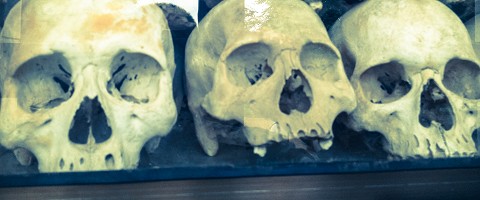
A commemorative building has been constructed in the middle of the grounds to hold the skulls and bones of those found on the property. We took off our shoes in respect of the dead before climbing the stairs. I have never seen so many skulls. They lined each ledge and filled each level, each representing a life lost. I just stood quietly as I allowed reality to wash over me.
After we visited the killing fields, we had the opportunity visit Tuol Sleng Genocide Museum. Tuol Sleng was originally a school. When first walking into the courtyard, I could easily imagine children playing in the grassy area or swinging on the monkey bars. As we walked from room to room we did our best to comprehend the reality of the pain that was endured in Tuol Sleng.
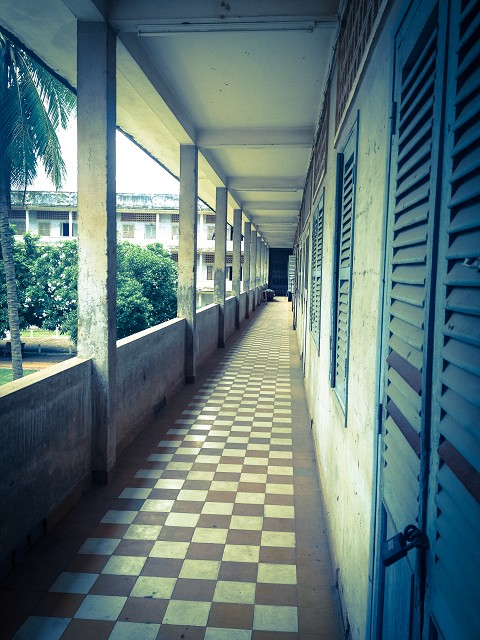
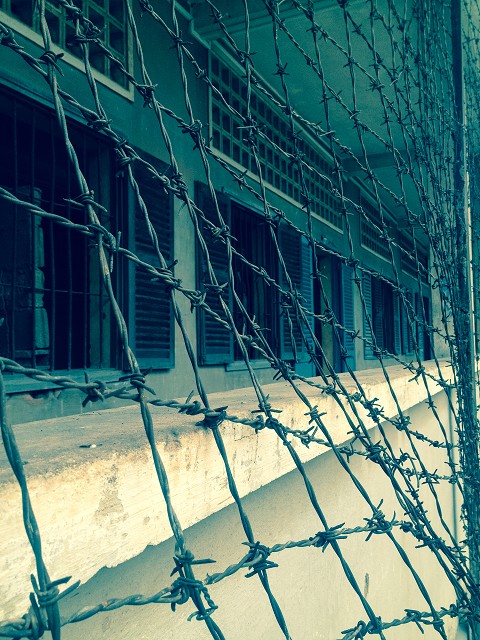
The buildings have not been altered since its occupation by the Khmer Rouge. Classrooms were turned into torture rooms. Swing sets were transformed into ways of extracting information. Barbed wire still hung across the doors and windows. There were jail cells, handcuffs, wrought-iron beds and feet shackles. Under each bed were massive stains that appeared from the blood from the prisoners. There were faint marks on the walls, counting the number of inmates in each room.
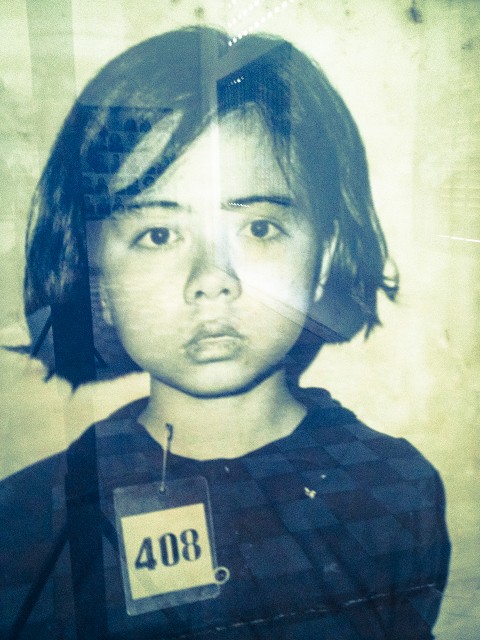
The Khmer Rouge keep very detailed records of each prisoner.There were printed transcriptions of false confessions from the innocent victims. One entire room was dedicated to pictures of those who had been killed at Tuol Sleng. Thousands of photos hung around the room, documenting the number of people who entered through the gates of the former school, the majority who were shipped to the killing fields for execution. Of the estimated 17,000 people imprisoned at Tuol Sleng, there were only seven survivors.
The effects of Khmer Rouge's reign of terror has had long lasting effects. Today, nearly 35 years later the population ratio bears the scars. 80% of the population is under the age of 30, while 50% are under the age of 20. This leaves only 20% of the population over 30 years old.
These horrific events are far more than a story I was told or something that I read about. I was able to visit and to feel a miniscule amount the hurt and pain that the beautiful people of Cambodia had to experience.
Now, instead of looking at streets full of motorbikes or strange hats that appear just a speck in a field, I see wounded people who are in desperate need of the love of Jesus.
I am so grateful that he chose me to be a part of the healing process of Cambodia.







