
“Why did you come to see me today?”
“I’m having stomach problems and there’s this stuff….uhh… coming out… down there.”
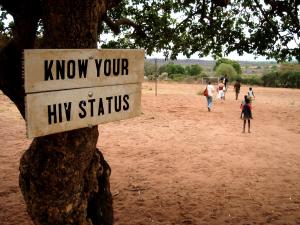
“Do you know your (HIV) status?”
“No.”
“Well, let’s test you.”
*5 minutes later*
“Do you know what two lines mean?”
“Yes.”
“What does it mean?”
“I have HIV.”
“Correct.”
I was sitting across the desk next to the patient when the physician delivered the news. I immediately looked at the patient to see her reaction.
But there was no reaction.
“Do you have any questions about HIV?” the doctor asked.
“No.” the patient replied
And she (the patient) departed the office without saying another word.
You see, I’ve been working in a clinic here in Pretoria, South Africa and this conversation is normal (as in it happens more than once a day).
Here are the facts:
- South Africa has the 4th highest prevalence of AIDS in the world
- Africa is home to 14% of the world’s population, but home to 69% of ALL people living with HIV
- Over 50% of people between the age of 20-30 in Swaziland have HIV (I’m going to Swaziland for the month of November)
- Reports have shown that if Swaziland continues at the same rate, the country will cease to exist by 2050.
A whole country…GONE!
Perhaps, that doesn’t mean anything to you because it doesn’t directly affect you. But let me put that in perspective…By 2050, (insert any fatal disease) will wipe out every single person in (insert your country).
Is it a problem now?
I won’t go into detail about the remaining part of the conversation but here is what I do know…
We have to start telling the TRUTH!
The biggest barrier to stopping the spread of HIV/AIDS is our inability to tell the truth.
The people of South Africa have been given lots of information about AIDS – what it is and how it spreads.
HIV is not spread simply because of promiscuity, but because family members are raping their little girls, rumors spread about how to “cure it”, school officials are sleeping with students to pay off school fees, and acceptance is sought in dark places.
And nobody talks about it.
I can’t speak for everyone but when I was growing up, I loved hearing my parents tell stories. I loved hearing stories about their childhood, friends they had, and college experiences. I believe it helped me make better decisions when making choices that could affect the rest of my life.
However, the challenge comes when it’s our turn. Many of us never learn how to share our story. Stories are what connect us. And personal stories are where we first connect with the truth, the whole truth.
And many of us never tell our story because we have secrets.
How is it possible to tell the truth (or our story) while keeping secrets?
Secrets keep you bound. They lock away key facts. And if you disregard the secret long enough, your story changes because you’ve forgotten the painful part that you’ve withheld.
You probably feel that you share your story often but is it REALLY your story or is it your “socially acceptable” story?
The truly courageous person will venture into the dark realm of pain to unlock the doors that secrets have slammed shut.
Africa has some amazing stories but I challenge a continent to begin courageously telling their stories.
Children are depending on you.
Mothers and fathers are depending on you.
Countries are depending on you.
A continent is depending on you!
Everyone has a story that involves personal pain and needs God’s intervention.
Why do you think it’s so difficult to share our story? Have you ever shared your story and received a different response than you thought you were going to get?







