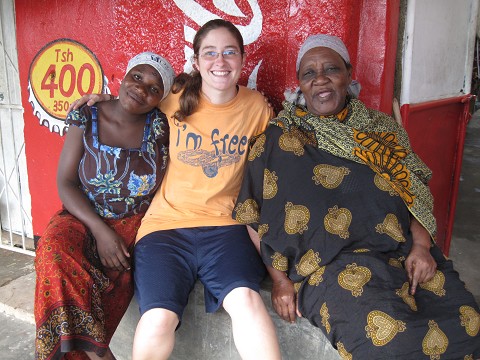
I am walking home from getting a coke when I hear “Karibu!” (welcome!) There are several young women sitting out in front of a building plastered with Coca Cola advertisements. This place in fact does not sell sodas at all, but is their homes. It is a small compound with 5 or 6 households within it. I debate in my head, I would really like to just go back to the house and relax, but they have welcomed me, and it would be a good opportunity to get to know some women in the community. So I make eye contact and wave and they wave me over. I go sit down. I am welcomed by squeals of delight, laughter at my attempts at Swahili, and zero English. Ok, well maybe this won’t be such a good opportunity. I decide I will just sit here for a while and leave as soon as an opportunity presents itself.
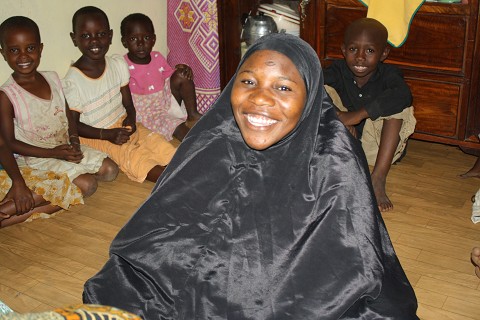
As I sit we “talk”, I get a lot better at Swahili in the matter of 20 minutes. I meet, Harima, Shaunee, her son Sudi, Bibi (grandmother), her grand-daughter Zaytunay, and Leah. They all live here in this compound. They show me how to make ugali (I may actually be able to do this when I return). They ask me my father’s name so that they can know my full name (Heather George Clyde if I lived in this part of the world.) We talked for a while that day and eventually I get them to teach me how to say “I will return tomorrow” in Swahili and leave.
I did, the next afternoon I headed back out to the Coca-Cola compound. There was nobody out front like had been yesterday. I knocked on the middle door yelling “hode” (can I come in?) and was welcomed by Bibi’s ever-genuine and loving “karibu”. I came into find her and Zaytunay preparing ugali again. I sat with them for a while practicing my newest Swahili phrases. They finished lunch preparations and invited me into their home for lunch. Yay!
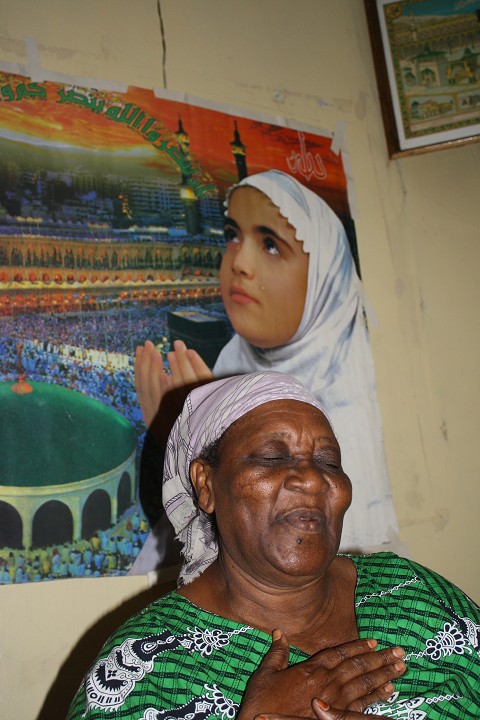
As we were sitting down on straw mats on the floor to eat, I noticed Bibi wincing and holding her knees. I did my best to ask what was wrong. All I understood was that they hurt. “Can I pray for you?” (Indicated by my bowing my head and pointing to the ceiling). They were hesitant to say the least. They pointed to the poster hanging on the wall that showed Mecca and pilgrims circling the kabaa. They explained that they were Muslim. “Ok, can I pray for you?” “Saoa” (ok). Sweet! They are letting me in their home, inviting me to eat with them, and they are granting me authority in their home to pray for this woman’s healing. We prayed and then we ate. We had goat with a sauce and ugali. It was pretty good and they laughed the entire time at the way that I was eating. They did teach me how to more effectively eat with ugali. We did not see any relief from the pain that day.
As the month went on I returned several times a week to visit, sing songs, laugh, and pray, Stacy even brought her guitar one day to play for them. Bibi kept telling me they are a little better. I think she is just trying to be nice to me. By the middle of the month though she was pointing to her knees and making the sign of the cross on them. Yes! She did get it. Jesus is healing your knees. We kept praying, I washed her feet one day, anointed her with oil, brought in the local pastor and had my team pray corporately for her healing.
By the end of the month she told me that her knees were feeling a lot better. They did not accept Christ as their savior while I was there but they did experience his love in a way they never had. They experienced Him loving them through healing Bibi’s knees. They knew God in a new and real way. How exciting?