
“Therefore, since we are surrounded by such a great cloud of witnesses, let us throw off everything that hinders and the sin that so easily entangles, and let us run with perseverance the race marked out for us.”
HEBREWS 12:1
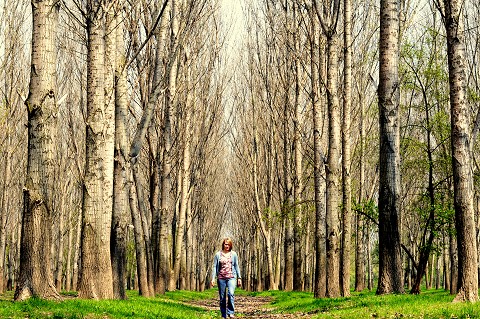
taken in Moldova by former teammate Suzi Ibanez
Approximately the week of the 13th of June marked the halfway point of this 11-month journey, as we have completed five and a half months of ministry. (now six months as I write this). Home is just as far away in both directions as it ever will be, and for me, it’s the longest amount of time I have been away from home. I think back over the last six months and all the experiences that I’ve had and think that there are just as many ahead of me as there are behind me.
So without going on about homesickness and learning experiences and life changes, here are a few random compilations of thoughts and experiences over the last five and a half months, and maybe a little advice for future Racers who might have stumbled upon this one. Enjoy.
From Worlds Away: The Lessons Learned
No matter where we land, some things are pretty much the same.
Each country we have been to has had its own cultural characteristics, but there are so many things that are common to all of them, from the mountain towns of Nepal to the bush of Mozambique.
Babies cry and cell phones will go off in the middle of church, even in the bush. Food serves as an international sign of welcome. Tea and smiling are pretty much universal, and kids love to run around naked. Shakira can be heard on any public bus in any country (and I’m pretty sure I’ve heard “My Heart Will Go On” on every continent so far). Almost everyone asks you three questions when they meet you: Where are you from? Are you married? and What do you think of Obama? If you are white, you are seen as walking money. Almost anywhere you are, you can find someone who speaks English to help you out, and almost everyone you meet can say, “Hello. How are you,” and “What is your name?” Capacity limits mean nothing on public transportation, and neither do traffic signals if you’re in India Prices are almost always negotiable, and the dirtier the place, the lower the price. Snickers can be found almost anywhere, but a coffee pot is a rare luxury. Anything can be sold on the side of the road, and they key to getting the price you want it to walk away.
Each month we work with existing Christ-centered ministries to come alongside them and do whatever it is they need doing. These ministries are often run by people who gave up their lives, jobs, and homes to serve the Lord and serve other people. I have seen that the Kingdom of God is really the same all over the world. These people know what it means to have a call on their lives to make disciples of the nations, to feed orphans and to care for the sick. It is something incredible to know that, in the middle of India or Swaziland or Moldova, we can find fellow brothers and sisters in Christ who, though not sharing the same language, can share a common desire for Heaven to meet Earth.
We were meant to live in community.
So one teammate eats your peanut butter and another leaves their dirty towel on the bathroom floor. Nothing you buy totally belongs to you, because everything is expected to be shared. Having seven people living together with one bathroom and nowhere to go can mean having little or no alone time. Despite the challenges, living in community for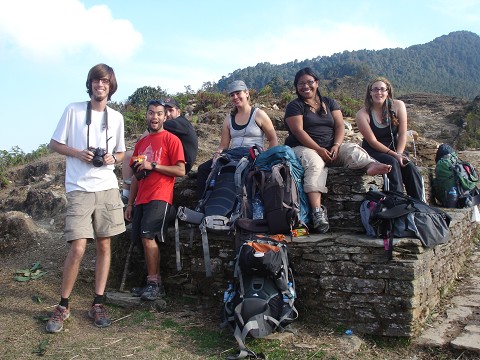 the past six months has been one of the biggest blessings of the Race. Simply put, we need each other. If we look at the first century church as described in Acts, we see this modeled by the early believers.
“They devoted themselves to the apostles’ teaching, and to the fellowship, and to the breaking of bread and to prayer. Everyone was filled with awe, and many wonders and miraculous signs were done among the apostles.”
“Every day they continued to meet together in the temple courts. They broke bread in their homes and ate together with glad and sincere hearts, praising God and enjoying the favor of all the people. And the Lord added to their number daily those who were being saved.”
“All the believers were of one heart and mind. No one claimed that any of his possessions was his own, but they shared everything they had.”
“The apostles performed many miraculous signs and wonders among the people.”
“There were no needy persons among them.”
This describes not only the community of the early believers, but this describes the model of the CHURCH. Just as often as we read that the believers were together, we read of the miraculous signs and wonders that occurred among and around them. Have we forgotten this model of the church? Could this be why so many are tired of religion? Hmm.
We say “goodbye” a lot on the Race. Our little community of seven often expands each month to include our ministry contacts and the people with whom we work and live with each month. Every month, we have to say “goodbye” to yet another ministry that we have grown so close with. This is so hard, because you feel like you’ve become a part of their family.
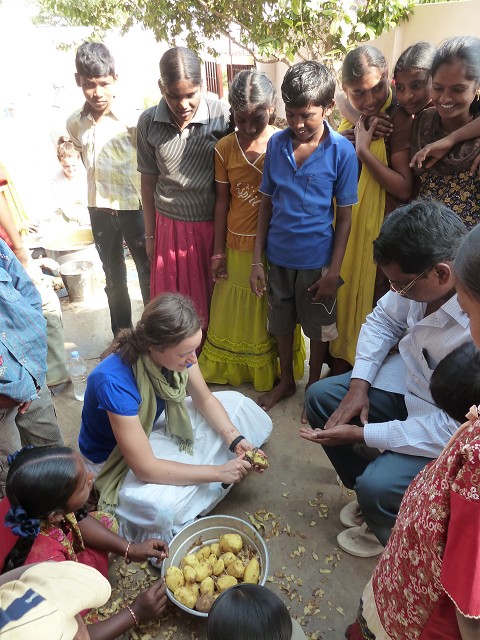 The pattern is usually the same. For the first two or three days at a new site, you are a “guest.” You are given the best food, waited on hand and foot, and it is made certain that you are comfortable and happy. You start learning people’s names, which babies belong to which mothers, and you learn a few phrases in the local language to communicate. Then you enter the “fellow worker” phase, where you begin to share equally in the responsibilities of daily life. You now serve yourself food, start doing the dishes and and you take it upon yourself to make sure the place is clean and there’s TP in the bathroom. You begin getting to know the people around you. By about the midpoint of the month, you become “family.” It’s at this point that your relationships with those around you grow, and sometimes it seems like the time you spend with your contacts is more meaningful than painting buildings or preaching to congregations. And then, all too soon, it’s time to say “goodbye” and move on to repeat the cycle all over again. And again. And again. For 11 months.
I am called to the mission field.
That is for certain. But the “mission field” may not look the way most people think – a shack in a third world country and long skirts. Will I find myself there in a long-term assignment from God? I’m not saying I won’t. But one thing that I have learned over the last six months is that living as a missionary embodies much more than leaving the United States and ministering to people whose language you can’t even speak. In every country I’ve been in, I have met individuals who gave their lives to serve the Lord by serving people in need around them. In Nepal, we met a man who, after seeing the conditions of children living in prison cells with their convicted parents, started rescuing these children and places them in homes. In Romania, we met a pastor whose vision for the poor community near the church led him to begin a Saturday program. In India, we met a man who gave up a very prominent position in the finance world to start an orphanage that is now home to over 80 children. The list goes on.
So this is my calling. Not as a World Racer, not as an individual, but as a Christ follower. I don’t know what it’s going to look like, but for the next five months, this is where I’m called, so that’s all I need to know for now (that, in itself, is a realization all it’s own . . . but I digress).
There is something unique and liberating about boiling your life down to 60 pounds.
We have a lot of noise in our lives, especially in the States. We’re constantly on sensory overload. We’re told that more stuff is better, old stuff is useless, and having more stuff will make you a better person.
Then you buy a 70-liter backpack and decide what stuff is important enough that you want to carry it around with you for a year. There are the non-negotiables – sleeping bag, tent, your passport – and everything comes down to a matter of weight, practicality, and yes, a little bit of refusing to go a year without item X (that’s where my harp came in).
Then you spend a year with your stuff. Sure, you can toss out a t-shirt or two and buy new ones here and there (or, my personal favorite, collecting old clothes from squadmates), but ultimately, what you pack you carry, and there’s only so much that actually fits in the pack, regardless of your willingness to carry it. Most everything else you use or consume outside your pack is largely out of your control – where you sleep, what you eat, where you bathe.
Then you realize that you can wake up and put on the same outfit you’ve been wearing for the last two days and, hey, no big deal. You also realize that what you have in your pack is probably more than most of the people you are ministering to have in their entire possession. And you realize how little is takes to actually live.
It’s not about miracles. It’s about mustard. And maybe water wells.
“Today people crave the spectacular. People are drawn to lights and celebrities, to arenas and megachurches. In the desert, Jesus was tempted by the spectacular – to throw himself from the temple so that people might believe – to shock and awe people, if you will. Today the church is tempted by the spectacular, to do big miraculous things so that people might believe, but Jesus called us to littleness and compares our revolution to the little mustard seed, to yeast making its way through dough, slowly infecting this dark world with love.” The Irresistible Revolution, p. 132
I’m going to admit. I expected “big things” to happen on the Race. The stories are real, and people see them happen. I came on the Race expecting to “heal the sick, cast out demons, and raise the dead” (Matthew 10). Okay, maybe a little more of the first two, although I’m not saying the last isn’t out of the question. My hands were healed through prayer back in March (see blog “My Hands. His Hands” from Romania), and trust me, God has shown up in more ways than I am even aware of through this journey, in everything from sending friendly strangers to help with travel days to provided $850 in financial support in less than a week. However, I’ve yet to see the blind see or the lame walk. We’ve prayed over deformed limbs, sore throats, injured eyes, crooked backs, and the list goes on, but none have been miraculously healed, or at least, not while we were watching. Sometimes I don’t even want to pray, because I think, “Nothing’s going to happen.”
But what I have come to realize is that I don’t need miracles to prove the power of God or to check something off on my World Race To Do List (although, I have slit a chicken’s throat – Item #17, haha). I don’t even have to see bodies healed or demons cast out to see God’s power. And as the author of the quote above says, Jesus describes the Kingdom of God like the spreading of a mustard seed. The seed, which is teeny tiny, grows into a plant that spreads over an entire area and basically consumes it. The farm where we dug a frog pond in Nepal grew mustard plants, and they literally took over the field to where you couldn’t see any other plants. This is how the Kingdom is designed to work. If it’s inhabitants – that is, the followers of Christ – are pouring out to others instead instead of just hovering in their inner circles of fellow believers – then the Kingdom will begin slowly spreading over an area.
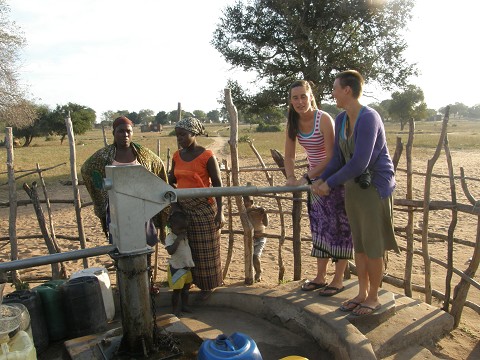 Our ministry site in Mozambique had electricity and running water and was located about 20 minutes from the nearest town, but most of the homes in the village around us had neither electricity or running water. There was a well in the center of town, and each morning, beginning around 6AM, women would begin showing up to pump their water for the day. There was a steady flow of ladies there until sundown. Several times our team would stop and help the ladies pump the water – which was quite the upper body workout! One morning we took fresh bread, I played my harp, and we pumped their water for them for about an hour to give them a break. We were barely able to communicate, but somehow I think we brought them a little joy in their day and gave them a reason to laugh! So that’s what it’s about. Just spreading some love.
. . . And other tidbits (mostly for future Racers)
- Instant coffee really isn’t that bad, and if you think you’re a coffee snob, your tastes will change (I don’t claim to be one; I just know a few instant coffee converts).
- When it comes to eating in foreign countries, never order a salad. Or Mexican food.
- Always conserve the battery life of your electronics, and NEVER lose your headlamp.
- Never be without food on travel days. You never actually know when your next meal with
- Facebook is your window to the world.
- Smelling nice isn’t always a priority. Brushing your teeth always is.
- There may be snakes in the tall grass. Walk through it anyway. There are waterfalls.
- Oatmeal is about the cheapest breakfast you can buy. It works as lunch or dinner, too.
- If you eat around other people, just plan on sharing.
- You really can make a bottle of shampoo last 3 months, and flip flops can count as dress shoes.
- Smile at people. You never know when you’ll meet a friend.
- People who go on the Race are not perfect. Everyone shows up with their own junk.
- Snickers and Shakira are pretty much universal.
- Never go anywhere without toilet paper.
- Sometimes plan change. Go with it.
- When you pray for travel safety, be sure you pray that you’ll find fresh baked bread. God will send it to you!
And attitude is everything!
I am finishing this blog sitting in a hostel in Johannesburg, South Africa. I’m looking back over six of the best months of my life, and looking ahead to five more. I am far from the person I want to be when I go home in November, and my prayer is this: that the end would not be my focus. Ministry can become routine, and when you have six welcomes and six goodbyes, you start to decide to not get so attached. Thoughts of driving your own car and eating Chick-fil-A start creeping in and can settle there, overtaking the joy of eating rice everyday and sleeping on the ground for a month. I don’t want to look back a year from now and realize that I just existed here. I don’t want to look back on my team and realize that I just took up one seventh of the available oxygen in the room. I am sitting in a hostel in Joburg, South Africa, surrounded by 35 family members, looking ahead at five months of opportunity. Lord, help me to not to miss it.







