80 percent of the people in Cambodia are under age 30. . .
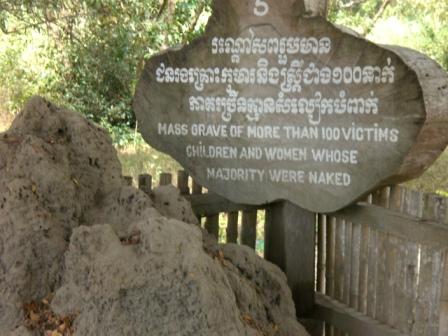
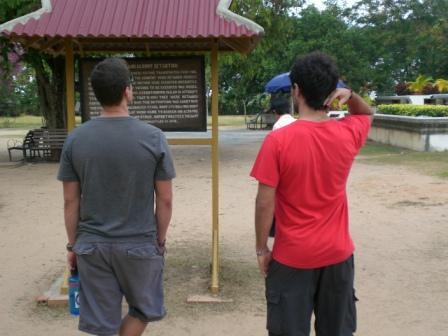
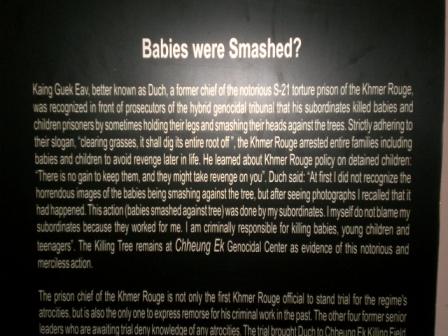
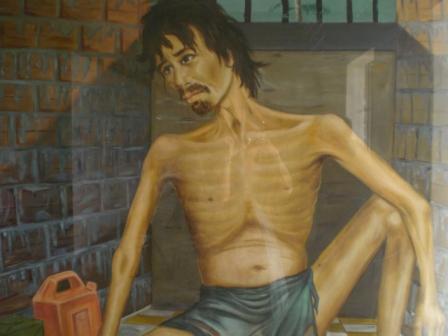
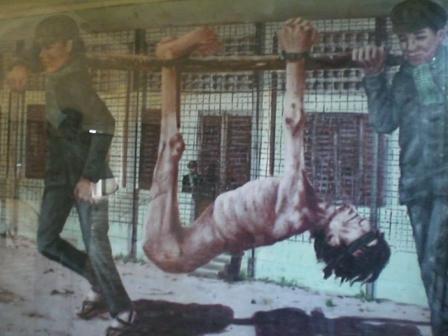
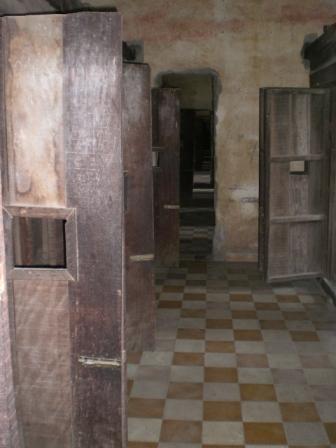
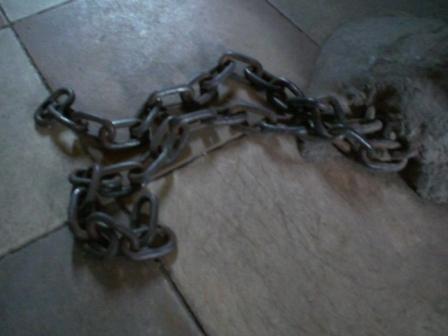
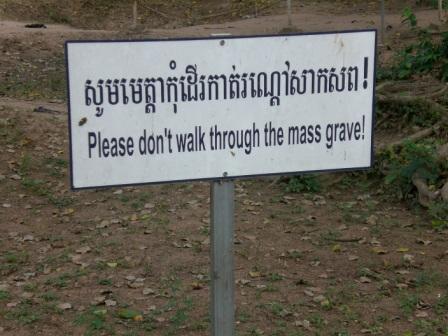
On April 17, 1975, the Cambodian capital city of Phnom Penh fell to the Khmer Rouge, beginning a horrific period in Cambodian history known as “the Killing Fields.” During this time, close to two million people were brutally tortured and slaughtered. We went to visit the Killing Fields today. We saw where innocent people were tortured and then thrown in pits. These mass graves were later dug up, and the bones of the victims have been put on display as a memorial.
How did this happen? How did I not know about this?
Shortly after their victory, the Khmer Rouge forced the evacuation of 2 million people from the city to the countryside, on foot. The wounded were forced out of hospitals; some of them were even wheeled out on hospital beds.
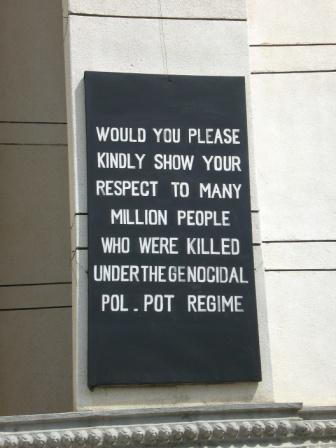
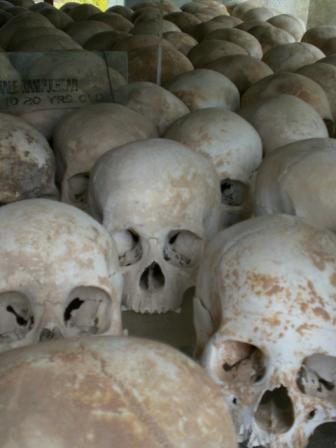
That’s because little was known of the leader of the Khmer Rouge, a Paris-educated communist known as “Pol Pot.” Pol Pot and the Khmer Rouge attempted to completely transform Cambodia overnight. That meant shutting off all contact to the outside world, eliminating loyalty to friends and family, emptying cities, and eliminating the Buddhist religion. Rather than “re-educate” the population, the Khmer Rouge thought it would be “easier” to execute anyone with any previous form of education whatsoever.
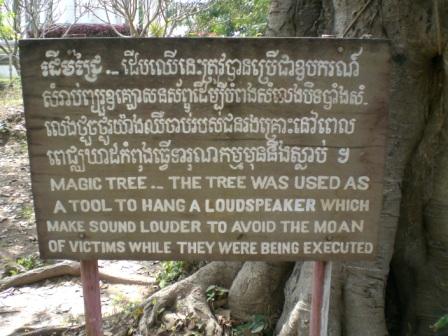
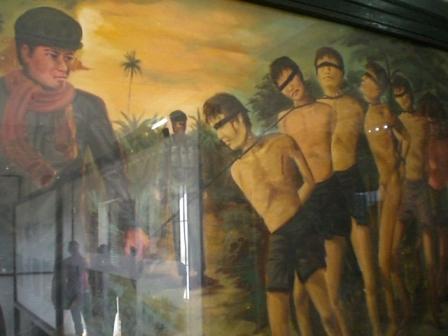
Those arrested were often “encouraged” to confess to things they didn’t do, being told the Khmer Rouge would forgive them and “wipe the slate clean”. Once a confession was given, the prisoners were taken away to a place to be executed.