
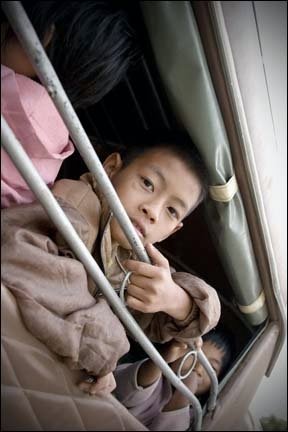
 There are more brothels than schools in Thailand. There are 200,000 to 300,000 prostituted persons in Thailand. 40% of the two million in prostitution in Thailand are under 18, meaning that about 850,000 children are in prostitution

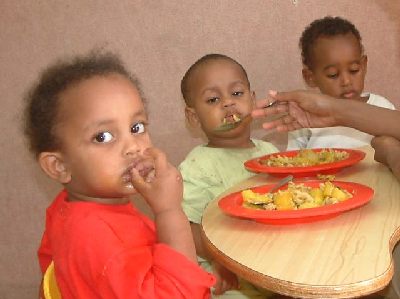
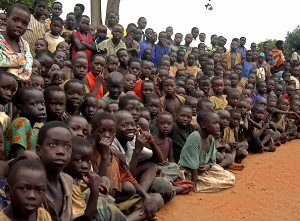
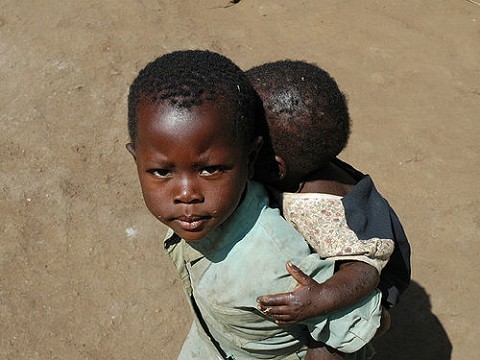
An argument I’ve read time and time again from people who don’t seem to understand the work of missionaries is that “we’re just trying to force our way onto them” or “they can get themselves out of it.” What I’ve learned through all of my work though is, it’s not that simple. These people aren’t lazy individuals who bring this upon themselves. They are people who are fighting corrupt systems and harsh realities. Take for example the mere fact that for every $1 in aid a developing country receives, over $25 is spent on debt repayment. The poorer the country, the more likely it is that debt repayments are being extracted directly from people who neither contracted the loans nor received any of the money. This is probably as far from aid as you can get! And as for forcing our ways onto them, it is important to remember that a person’s contentment with a situation of poverty does not make it OK. To illustrate this point, I am going to include a story I read.
Several hours later I had a dream. I dreamed about the dung truck. You could always smell the dung truck before seeing it. It was the kind of smell that was more like a taste at the back of your throat: pasty and bitter. The dung truck workers would pull alongside a building and haul out the animal waste that had accumulated on the ground level of the houses in the community as well as from the makeshift pens inside and outside people’s homes. The community was known for raising pigs, but goats, chickens, donkeys and dogs were the most abundant creatures in the garbage village.
The men who served in this capacity would shovel dung into large wicker baskets and then-carrying the baskets on their shoulders or their heads-walk up a plank ramp to dump the contents into the back of a flat-bed truck. In the process they would become caked in dung from head to foot. Temperatures of over 100 degrees released the dung’s pungent odor with a vengeance, making this task even more intense than can be appreciated by someone reading this in comfort.
In this dream I was walking past the dung truck. To my horror I saw my children, Hannah, Philip and Laura, sitting on top of the mountain of dung heaped on the bed of the truck. What struck me most about them was that they appeared perfectly content although every inch of their bodies was covered by animal waste. Then I felt the Lord speaking to me. He seemed to be saying, “As their father, are you satisfied? Even if they are satisfied, are you satisfied?”
My passion for my kids is a shadowy reflection of God’s heart, which yearns for his children to have more than the dung that surrounds them; not riches, but a life in which their needs are met in a way that doesn’t mask their need for him.
The issue of poverty really just gets my mind spinning a million miles an hour. I think of the $2 a day poverty line people can’t make and realize I spend more than that on my Starbucks coffee each time I have it. It gets overwhelming when I think about it in a way as if I’m supposed to conquer it and solve it alone, but that’s not what God wants from me. There was a really controversial birth some time ago. You may have heard of the guy-Jesus. If you start thinking about the way He came into this world, you realize, it was through a peasant family, stirring up a cloud of shame. He was considered the illegitimate son of a carpenter by every family in that village. Did he really have to show up on earth in a way that produced such dishonor? Why on earth would God choose to be born among a defeated people in a backwoods town under a shadow of dishonor through a dirt-poor, unwed teenager? The answer, my friends, is solidarity. The very first statement Jesus ever voiced about his concern for poor, oppressed, marginalized people was when he cried out as one of them-eyes shut tight, mouth open wide, wailing, kicking, shaking and dripping with blood and amniotic fluid. It was one of the most profound acts of solidarity with the poor he could make. He cast his lot not with the world’s emperors or with the rich and powerful but with the world’s demoralized peasants. When God voted with his birth, he voted for the poor. I don’t have to conquer this poverty issue alone; you don’t have to conquer this poverty issue alone; God already sent us Jesus to help. That doesn’t free us from acting though. “While the missionary impulse runs strong in the new friars and big audacious visions of lighting the world on fire for Christ captivate their imaginations, it is ultimately a spirit of surrender and obedience-a willingness to light one candle at a time-that moves them from person to person, from household to household and from neighborhood to neighborhood, welcoming the kingdom of God as they go.” So, with poverty, as well as a number of issues, it’s great to have visions and want to end it all, but if we all concentrate on lighting our candle and surrendering to God, we’ll make that much more of a difference.
(NOTE: excerpts randomly throughout taken from The New Friars by Scott A. Bessenecker)







