
As we move into the middle of our ninth month on the race here in Gua Musang, Malaysia, and continue to teach English to the children of this community, one thought in particular has bombarded my mind, namely: “I do no want to be anywhere else.” Because we are in a fundamentally Islamic state and there is no direct speaking about our faith allowed, I have had to work that much harder to “set my mind on things above” (Colossians 3:2), so that I may consciously and actively grow in my relationship with the living God—but it’s worth it.
Teaching is definitely my forte, so that definitely helps me to engage in this ministry with passion. And, as we are now past our first week of classes, the students know us much better than they did before—which makes everything a whole lot easier. Though the work is fulfilling to me, it’s not exactly the type of work that makes for epic Facebook statuses or profile pictures.

Gua Musang is a beautiful town, without a doubt, but the fact that it is within only a few hours’ travel from both Kuala Lumpur, one of Southeast Asia’s (if not all of Asia’s) most westernized and technologically advanced cities, in one direction, and beautiful tropical beaches in the opposite direction has not totally escaped my mind. My daily scenery consists primarily, not of white sand and blue waters, but of white boards and blue markers—but that doesn’t bother me. Brandon and I sleep on couch cushions in the back of our teaching center, but that doesn’t really bother me either. As a whole, I really don’t feel as if I’m missing out on anything. To make a long story short (which has never been a talent of mine!), the things of the world—not even sinful things, just things—are becoming, well—boring. They have lost almost all of their attractiveness and almost all of their pull.
I’m becoming a really lousy tourist. I’ve been to Romania, but I didn’t see Dracula’s castle. I’ve been to India, but I’ve didn’t see the Taj Mahal. I went to Nepal, but I didn’t see Everest and I went to three countries in Africa without ever going on a Safari. Despite all of this, however, I still don’t feel as if I have missed out on a thing.
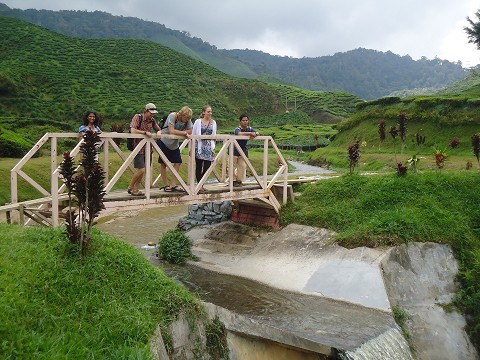
Now, I’d be lying to you again if I failed to admit that thoughts of seeing these places and doing these things haven’t crossed my mind—even if for no other reason than to post about it online and try and impress you. And, if you’ll allow me to expose one of the raw, inner caverns of my heart, I would also admit that I am not yet at the point where I find all of my identity in Christ, thus eliminating the need to try and impress anyone. Praise be to God that I am moving there—or, more accurately, he is moving me there—rapidly, but I am not all the way there yet.
Identity issues aside, though, I really don’t enjoy the things of this world as much as I used to. They’re not enticing. They’re not captivating. They’re not evil, either—but they’re dry—mundane, cheap, plastic, and black-and-white. The epitome of this idea is found in something I read in Philippians 3:7-9 a few weeks back:
“But whatever were gains to me, I now consider loss for the sake of Christ. What is more, I consider everything a loss because of the surpassing worth of knowing Christ Jesus my Lord, for whose sake I have lost all things. I consider them garbage, that I may gain Christ, and be found in him, not having a righteousness of my own that comes from the law, but that which is through faith in Christ.”
Whatever used to be a gain—luxuries, trinkets, souvenirs—is now a loss—because of the surpassing value of knowing Christ. This doesn’t mean that these things are intrinsically valueless or intrinsically sinful—because they’re not all—but rather that they’ve been eclipsed by tastes of the glory of God. These things are starting to truly feel, to me, like garbage.
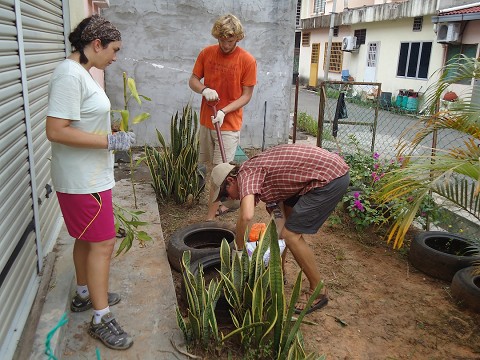
Now garbage is not something I crusade against. If we crusade against garbage, we come off as insecure and as head cases—and we might well be! Garbage is not demonic. Garbage is not lurking around every corner, trying to take us captive. That’s the stuff I crusade against. Garbage doesn’t really want to harm me and garbage isn’t that harmful. Garbage is simply something that I throw out. I disregard it and throw it out. It’s simply something I say “ehh” too and move on.
But as detached and dispassionate as the disinterested, shrugging, “ehh” sounds, it can bring great glory to God when it is truly meant. Imagine if you saw a brand new rolex sitting in the garbage. Imagine if someone received a Lamborghini, decided it wasn’t all that great of a car, drove it to the junkyard, shiny and new as ever, and dropped it off. That would be shocking. This same concept is true of the Christian life. When we shrug off—disregard, yawn at, throw away, pass up—many of the things this world esteems as valuable, people notice. It is shocking.
This, for me, has been a huge answered prayer. Admittedly, I am not nearly the prayer warrior that I could and should be, but one of the few things that I do pray day in and day out for is for God to make the things of this world uninteresting to me in order that I may not water down my view of his glory. And God, being the God that he is, has ruined my life by answering that prayer!
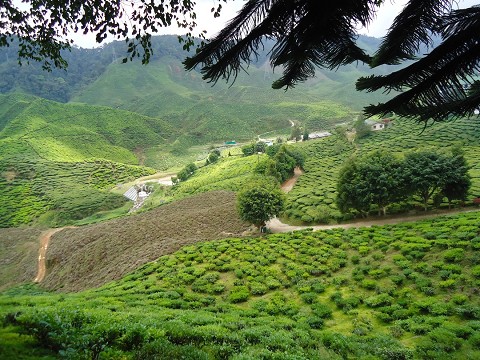
I can’t even make it through a movie anymore! I try to watch Talladega Nights and my mind wanders to 2 Corinthians before the movie is halfway done! Now, please, don’t get me wrong. The last thing I want to do is triumph my own righteousness. I am dead flesh. Dead flesh can’t will itself to embrace life. Any and all change in me is purely the grace of God actively working out change in a passive me—which I have to imagine Paul is getting at when he finishes his famous “garbage” zinger with the caveat, “…not having a righteousness of my own…” I could not have willed myself to consider things garbage. God alone has to do that in me and for me—but he does respond to prayer. So, in that light, Pauls’ Philippians “garbage rant” is not a command, but a diagnostic. Do you consider the things of the world as garbage? If you don’t, then beg that God would create that mindset in you and for you.
The last thought that runs through my mind is always, “Why can’t I have both?” I was thinking this just a few days ago. “Why can’t I both ‘gain Christ’ and be largely a relaxed, leisurely, tourist in this beautiful country of Malaysia?”. In my opinion, the answer lies in the understanding of what God’s truly after.
If God’s main purpose—his end goal—is to save souls, then there is absolutely no reason why I can’t “gain Christ” and “consider the things of this world as something more than garbage.” For one, I’m already saved, and secondly, the salvation process (Romans 10:9) has nothing at all to do with my views on worldliness! This is where we stop, most times. But God is after so much more.

If God’s deepest goal, one the other hand, is to exalt the glory of his name—to trumpet a symphony across the heavens and put on display the mind-blowing beauty of his image, attested to, in unison, by a sea of saints and angels singing “worthy is the lamb”—and for us to deeply enjoy participating in this worship experience, then the “regular old” things of this world can actually run opposed to this goal in that they turn our gaze from the God’s whose driving purpose is to capture our gaze! If the Mona Lisa exists purely for us to memorize rote facts about its painter and say a few words regarding him, then a few tiny splotches of rogue paint in the corner would be inconsequential. But if the Mona Lisa exists to be put on display—marveled at, adored, and enjoyed, in the finest art gallery by people from all over the world, then those splotches of paint—harmless in and of themselves—would be opposed to the very core of that painting’s purpose!
Let it not be that way with us. I pray that the things of this world—despite the fact that most all of them are neither sinful nor bad in and of themselves—would slowly become like garbage to us—lazily tossed on the side of the road. It is at this point that we can gaze upon Christ in his fullness. I’ve had tastes of this—Christ in his fullness—here and there, and it kills me–it's tantalizing–that I can’t describe it to you. But, then again, if I could, he wouldn’t be Christ.







