God has what seems to be a habit of laying new challenges on us just before we finish getting acclimated to our previous sets of challenges. I believe he does this to save us from ourselves—so that we avoid toxic complacency. Just as I was getting settled into “the way things work” in Eastern Europe, it became time to leave for India! After a three-hour flight, a nine-hour layover in Moscow, and another six-hour flight, we arrived in Delhi, sweaty and sleep-deprived but ready to tackle the challenge of bringing the Gospel to Asia.
If stepping out the airport doors into the humid Delhi air was my baptism into the third world, it was certainly baptism by full immersion—no sprinkling whatsoever. It is always a life-changing experience when the things you’ve only seen in movies suddenly become real to you. As we rode beat up old taxis (they drive on the left side of the road!) back to our hostel, I mentally redefined my idea of what constitutes sensory overload.
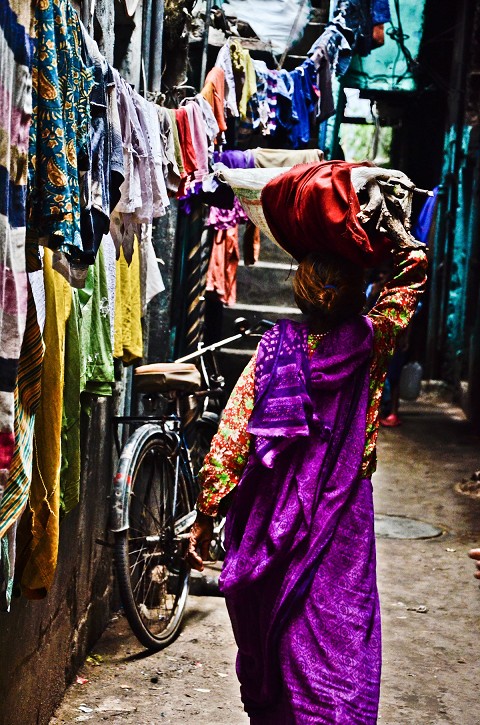
As we drove, my heart became more and more burdened for this country. I had never seen such vibrant life and such poverty juxtaposed. Taxis, bicycles, rickshaws, and motorcycles weaved in and out of each other at rapid speeds, always narrowly missing collisions, making full use of their horns and little use of the lane markers. Street vendors on every corner sold fresh vegetables, and women in brightly dressed clothes walked on the sides of the road with bags of rice on their heads. The air smelled of sweat, smoke, trash, and feces mixed together.
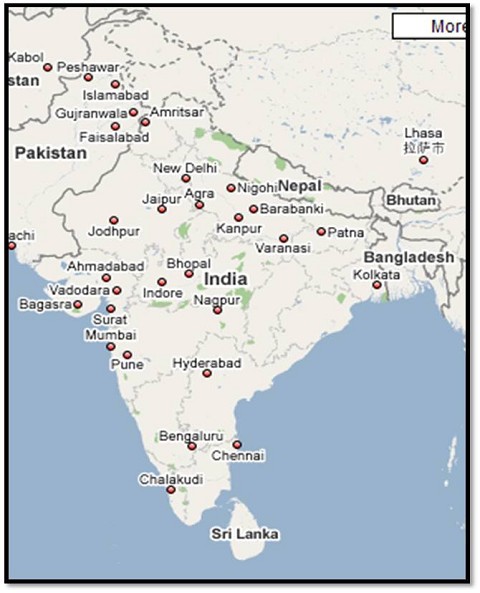

After a little less than 24 hours in Delhi, we headed to the train station for the next segment of travel—41 hours on an Indian sleeper car! That Indian train was an experience in and of itself! There was no air conditioning on the train so I soon became covered in sweat, especially since my bunk was stacked on the third row, closest to the ceiling. We traveled over 1,300 miles—more than 1/3 of the distance across the United States, to put it in perspective—allowing us to see a great deal of the Indian countryside.
As we passed poor rural village after poor rural village, it became apparent to me just how much of this country lives below the poverty line. There were not swatches of poverty here and there—rather, it was the norm. Communities of shacks (and “shacks” is a generous description) were everywhere, many of which were surrounded by heaps of garbage or oddly colored standing water. It was as if people had given up and process of beautification long ago.

I have really been wrestling with God about what my role is, as a Christian, in relation to this poverty. Every time the train would stop, many beggars would board and walk up and down the aisle, many of whom were little kids and lepers. They would certainly not hesitate to touch you (even your face and hair) when begging, and some of the little children even got on their knees to beg. I gave food and money to two small children, but ignored many others, even as they touched me, and stared out the train window in the opposite direction. One the one hand, I am not convinced that giving these people money is best for them in that it could create a cycle of dependence. On the other hand, though, I look at verses like 1 John 3:17 (“If anyone has material possession and sees a brother or sister in need but has no pity on them, how can the love of God be in that person?”) and wonder what I should have done and what I should do in the future this month.
In the end, what the people need most is obvious and will remain the same regardless of race, culture, or economic status: the Gospel.
We arrived in Bangalore at 3am on the 16th, exhausted, but ready to bring that Gospel to this city! More to come on this, and on our ministries here (preview: they are excellent!) in the next few days! Please pray that God works in these people’s hearts in advance, preparing them for the Gospel. “The harvest is ready….”