
My teammates and I have had a saying these past few months whenever we find ourselves in a situation that feels ridiculous or surreal. We simply look at each other and say: T.I.A. which stands for This Is Africa.
When we’re smashed into a public “bus” (which is actually a 12 passenger van) with 30+ Africans, when we kill a dozen cockroaches in our bed before crawling in for the night, and when we have no choice but to pee behind a bush on the side of the road: “T.I.A.”
Africa has been somewhat different from what I expected. The village where we live is definitely primitive and is probably close to what you might imagine Africa to be. There is, however, a town about 30 minutes away where we can find wifi, get a cup of coffee and buy our groceries for the week from an actual grocery store.
Although the things the town has to offer are a nice change, being there makes us more of a target than we are in our village. It can be overwhelming to be constantly called after, followed, and asked for money/food/help. And when it’s our day “off,” it’s often tempting to hang up the missionary hat for a while. It’s easy to just hunker down in an internet cafe or coffee shop, put headphones in and escape the world around you.
And to be honest, that’s what I usually do.
This past Saturday, we were in town again running some errands. We all had different things to take care of, so we split up into pairs and chose a time and place to meet up.
Jessica and I went to the bank, the grocery store, and picked up something for dinner for the team. When we arrived at the agreed upon meeting spot we were early, so we sat down on the curb with our groceries wedged safely between us.
It wasn’t two minutes before one of the street children walked up to us, put his hand out and began repeating “Madam, Madam, Madam”, which is how they ask for money.
For some reason, this time, I looked up and saw him with complete clarity. I didn’t see just another begging child, but rather a little boy who didn’t have anything or anyone. So instead of just shaking my head and saying, “I’m sorry I don’t have any money”, I smiled and said, “Hello! How are you?”
It was immediately apparent that I was one of the first – if not the only – person who had ever responded to him like he was an actual human being. His eyes got huge and began to back away. I started laughing, because I think he was afraid of me.
He stood a few feet away trying to size me up, so I reached into my bag and pulled out some candy. I think he was happier when I handed him that candy than he would have been with money – just like any other eight year old boy. I patted the spot next to me on the curb and he slowly made his way over and sat down by my side. I asked his name and he said it was Dezi. After I told him my name and he repeated it to himself half a dozen times, he went back to his candy and I was able to take a closer look at him.
From his milky yellow eyes I was almost sure Dezi was HIV positive, which likely meant he had been orphaned by the same disease. His clothes were tattered and his bare feet were caked with dirt. Without a thought in my head, I reached into my grocery bag, pulled out the pack of baby wipes I had just purchased (they are life savers), and began carefully wiping off his feet. It took four wipes to clean each foot and although he watched me like I was out of my mind, it was the most tangible way I could express love to this little boy alone in the world.
I wanted desperately to tell him that he has a Father who loves him, but was at a loss because he didn’t know a word of English and I’ve picked up very little Chichewa. So I did the only thing I could think of – I sang to him. There is a song I learned in the States and re-learned here this month. It’s simple and therefore easy to remember. It repeats, “Fa-na-na … na Yesu”, which simply means, “be like, be like Jesus”.
He covered his face and laughed as I sang, thinking it so hilarious that an “azungu” could sing a song in his language. After a few choruses, he began singing it with me, and I sat there praying that if he ever thought about this strange white person and wondered why she was different, that he would remember this song.
A few minutes later, the rest of our team arrived and it was time to say goodbye. Before we parted, I did give Dezi all of the money I had left, but he hardly noticed it. He just kept staring up at me with his wide eyes, trying to figure out why I was so strange.
I was close to tears as we walked away and Jessica, who had watched the entire exchange, simply smiled at me and said, “T.I.A.”
And she was right.
This IS Africa. Dezi is Africa.
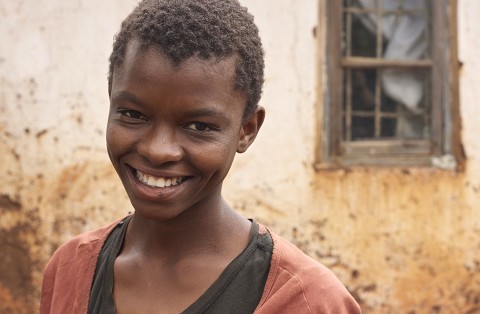
It’s not the culture, the weather, the food or the sad infomercials you see on Saturday mornings. It’s the people. The women who sell the vegetables they grow in their front yard. The men we bargain with at the market. The children who chase us down the street, screaming and laughing. It’s also the dirty feet and yellow eyes of a little boy who has to be an adult at eight years old.
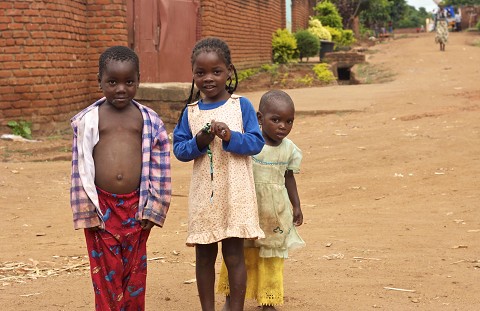
I was changed by my time with Dezi. My definition of T.I.A. was changed. Instead of letting this continent be defined in my mind by the smells, cockroach infestations, uncomfortable travel, and hundreds of other surface and ultimately inconsequential details, I choose to define it by the smiles, giggles, songs and love that I feel here.
Because That Is Africa.







