
I thought I would do an individual post about each country I will be going to so I can learn more about the people and culture before I go to serve them! :]]
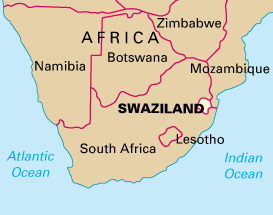
Autonomy for the Swazis of southern Africa was guaranteed by the British in the late 19th century; independence was granted in 1968. Student and labor unrest during the 1990s pressured King MSWATI III, Africa’s last absolute monarch, to grudgingly allow political reform and greater democracy, although he has backslid on these promises in recent years. A constitution came into effect in 2006, but the legal status of political parties remains unclear. The African United Democratic Party tried unsuccessfully to register as an official political party in mid 2006. Talks over the constitution broke down between the government and progressive groups in 2007. Swaziland recently surpassed Botswana as the country with the world’s highest known HIV/AIDS prevalence rate.
Geography:
-Slightly smaller than New Jersey
-Borders Mozambique and South Africa
-Highest point is Emlembe (6,109 ft)
-Capital is Mbabane
People/Society:
– The Swazi people are descendants of the Bantu who originated in the Benue-Cross Region in Cameroon.
-English and siSwati are the official languages
-40% Zionist, 20% Catholic, 10% Muslim, and 30% claim other (Anglican, Methodist, Mormon or Jewish)
-Population is 1,403,362
-Age structure: 0-14 years: 36.9% 15-24 years: 22.4% 25-54 years: 32.7% 55-64 years: 4.2% 65 years and over: 3.7%
-Life expectancy is decreasing due to HIV/AIDS, it’s estimated that by 2050, Swaziland may cease to exist.
-Median age is 20.7 years old
-An estimated 180,000 people living with HIV/AIDS in 2009, 25.9% HIV/AIDS adult prevalence rate, #1 in the world
-9% of children, 5-14, are in child labor situation (est 2000)
Government:
-Monarchy, King Mswati III (1986)
-Gained independence September 6, 1968 from the UK
-National symbols are the lion and elephant
–The shield depicts racial harmony and is also part of the weaponry of the “Sotja” (soldier) Regiment that served in World War II. The blue represents the sky; the yellow is for gold, or the country’s mineral wealth; and the red is the rich fertile soil of Swaziland.
Economy:
-Agriculture: sugarcane, cotton, corn, tobacco, rice, citrus, pineapples, sorghum, peanuts, cattle, goats, sheep
-40% unemployment rate
-69% live below the poverty line
-Exchange rate is 9.58 emalangeni to USD







